Travel through coffee, one kitchen at a time. Choose a country or region and discover a local coffee tradition you can make at home.
73 destinations · 87 recipes · A growing collection
AN ATLAS OF COFFEE
Where shall we have coffee?
Explore · Brew · Share
Hover over a country to discover a cup. Select it to explore. On a phone, tap the map or use the country list.
Recipe available Still exploring
Select a country to discover its coffee.
Present-day geography in an old atlas style. Countries and territories are shown for navigation; coffee traditions often cross borders. Map: Natural Earth, public domain.
Home adaptations for exploration, with regional sources below. These new recipes have not yet been kitchen-tested by Barista Recipes. Recipes use metric measurements. Each recipe has a US / UK conversion table below. Conversions are approximate.
Vietnam · Huế
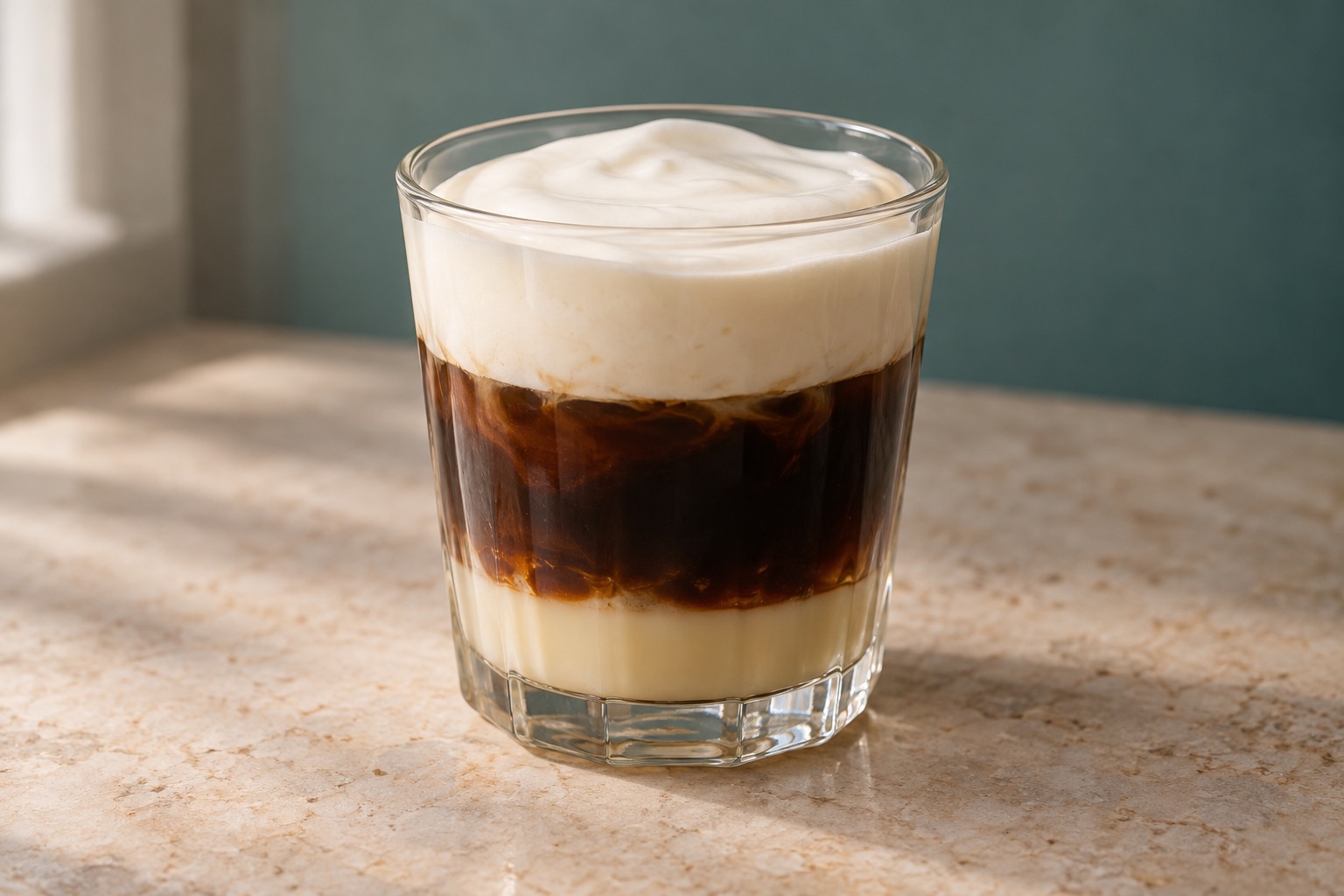
Cà phê muối
Sweet coffee, salted cream
A Huế coffee specialty brings condensed milk and a lightly salted cream topping together. This home adaptation uses strong filter coffee; a Vietnamese phin is a good choice.
The story behind the cup
Salt coffee is closely associated with Huế, Vietnam’s former imperial capital. Its appeal is the contrast: strong coffee and condensed milk underneath a softly salted cream topping. The salt adds a savoury edge to a sweet drink. This is a contemporary Vietnamese café specialty rather than an ancient ceremonial recipe, and its spread beyond Huế shows how inventive the country’s coffee scene remains.
Coffee brewer, measuring jug or scale, small bowl, whisk and 180–200 ml heatproof glass.
Ingredients
90 ml strong brewed coffee
20 g sweetened condensed milk
30 ml whipping cream
1 small pinch fine salt
Make your coffee
Whisk the cold cream and salt in a small bowl until thickened but still pourable.
Prepare and measure 90 ml hot strong coffee using the linked base method.
Put condensed milk in a 180–200 ml heatproof glass. Add coffee and spoon salted cream over it; serve one portion immediately.
A home interpretation of salted-cream coffee described by Việt Nam News. These quantities are suggested home amounts, not the café’s formula. Contains milk; add salt sparingly.
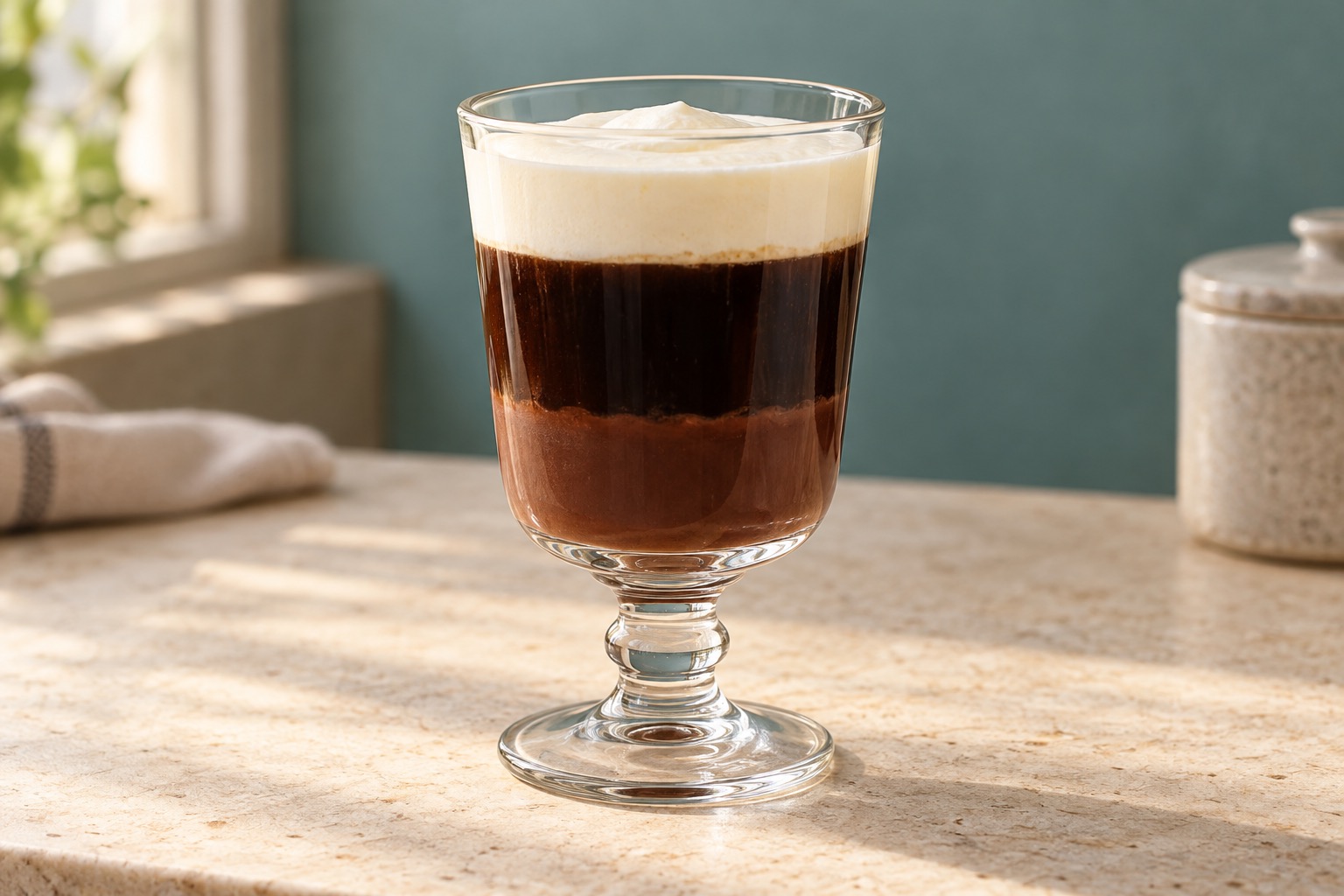
Turin’s bicerin is served in distinct layers of coffee, chocolate and cream. The historic café keeps its recipe secret; this is our accessible home interpretation, not its original formula.
The story behind the cup
Bicerin belongs to Turin’s café culture. The historic Caffè Al Bicerin describes it as an evolution of the older bavareisa, with coffee, chocolate and cream served in distinct layers. Its name refers to the little glass that makes those layers visible. Sip through the cream rather than stirring everything together: the changing balance of chocolate, coffee and cool cream is part of the experience.
Coffee brewer, small pan, bowl, whisk, spoon, measuring utensils and 220–250 ml heatproof glass.
Ingredients
60 ml strong brewed coffee
60 ml whole milk
20 g dark chocolate, chopped
30 ml whipping cream
Make your coffee
Whisk the cold cream in a small bowl until thickened but pourable.
Heat milk in a small pan until steaming, without boiling. Remove from heat and stir in chopped chocolate until smooth.
Prepare and measure 60 ml hot strong coffee using the linked base method. Pour chocolate milk into a 220–250 ml heatproof glass, slowly add coffee over a spoon and top with cream. Serve immediately; layers may mingle in this home version.
A home interpretation of coffee, chocolate and cream; the café’s original formula is not published. Contains milk; check the chocolate for other allergens.
Recipe reference: Caffè Al Bicerin · The bicerin. Home preparation adapted from the source; methods and preferences vary.
In Salento, coffee over ice meets sweet almond syrup. Use syrup made for drinks, rather than substituting unsweetened almond milk in the same quantity.
The story behind the cup
In Lecce and the wider Salento area of southern Italy, espresso meets ice and sweet almond syrup. Caffè Leccese turns a short coffee into a refreshing summer drink while keeping its espresso character. Almond sweetness gives it a different identity from ordinary iced coffee with milk. Recipes and proportions vary; our version follows that regional combination rather than claiming a single definitive original.
Kopi jahe means ginger coffee. This spiced home version takes inspiration from an Indonesian recipe using fresh ginger, cloves, cardamom and cinnamon. Preparations vary between homes.
The story behind the cup
Kopi jahe rempah combines coffee with ginger and aromatic spices. It belongs to a wider Indonesian tradition of enjoying warming ginger drinks, including simple preparations sold at small food stalls. Here, ginger’s heat and the fragrance of spices become as important as the coffee itself. This is one home interpretation of a flexible drink, so the spice mixture need not be identical in every household.
1 small cinnamon-stick piece, about 2–3 cm (home measure)
1 teaspoon instant coffee
1–2 teaspoons sugar, to taste
Make your coffee
Crush the cardamom lightly. Warm it with the clove and cinnamon in a dry saucepan for about one minute, until fragrant.
Add the water and ginger. Bring to a boil, then simmer gently for 10 minutes.
Strain into a heatproof mug. Stir in instant coffee and 1 teaspoon sugar until dissolved, taste, and add up to 1 more teaspoon sugar. Serve one portion.
One serving adapted from a four-serving spiced coffee. Ginger and cinnamon amounts are practical home measures. Remove the whole spices before drinking.
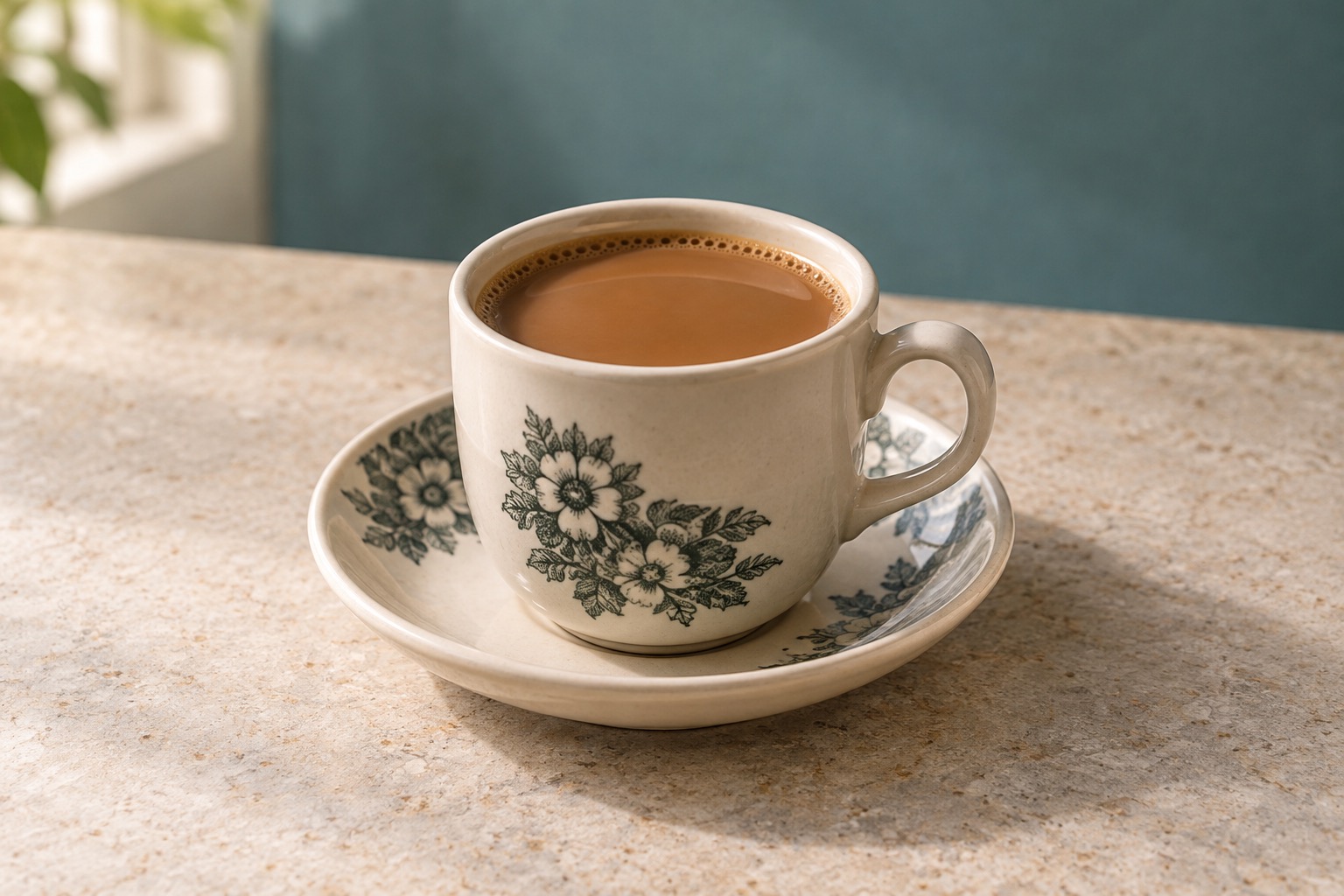
Hong Kong café culture brings coffee and milk tea together in yuen yeung. This home adaptation uses strong black tea and evaporated milk; the balance is a starting point to adjust to your taste.
The story behind the cup
Yuen yeung brings two everyday favourites together: coffee and Hong Kong-style milk tea. It fits the practical, inventive world of local cafés, where familiar ingredients become a distinctive house drink. The tea contributes tannic structure while coffee adds roast flavour, with milk softening both. Long-established cafés such as Lan Fong Yuen serve it alongside milk tea; it is a blend with its own identity, not simply coffee with a tea garnish.
Steep the tea bag in the hot water for 4 minutes, then remove it.
Brew the coffee and combine with the tea in a heatproof mug.
Stir in the evaporated milk. Taste before adding sugar.
The cited tourism guide describes the drink’s cultural setting. These quantities are a home adaptation, not Lan Fong Yuen’s recipe. Contains milk and caffeine from both tea and coffee.
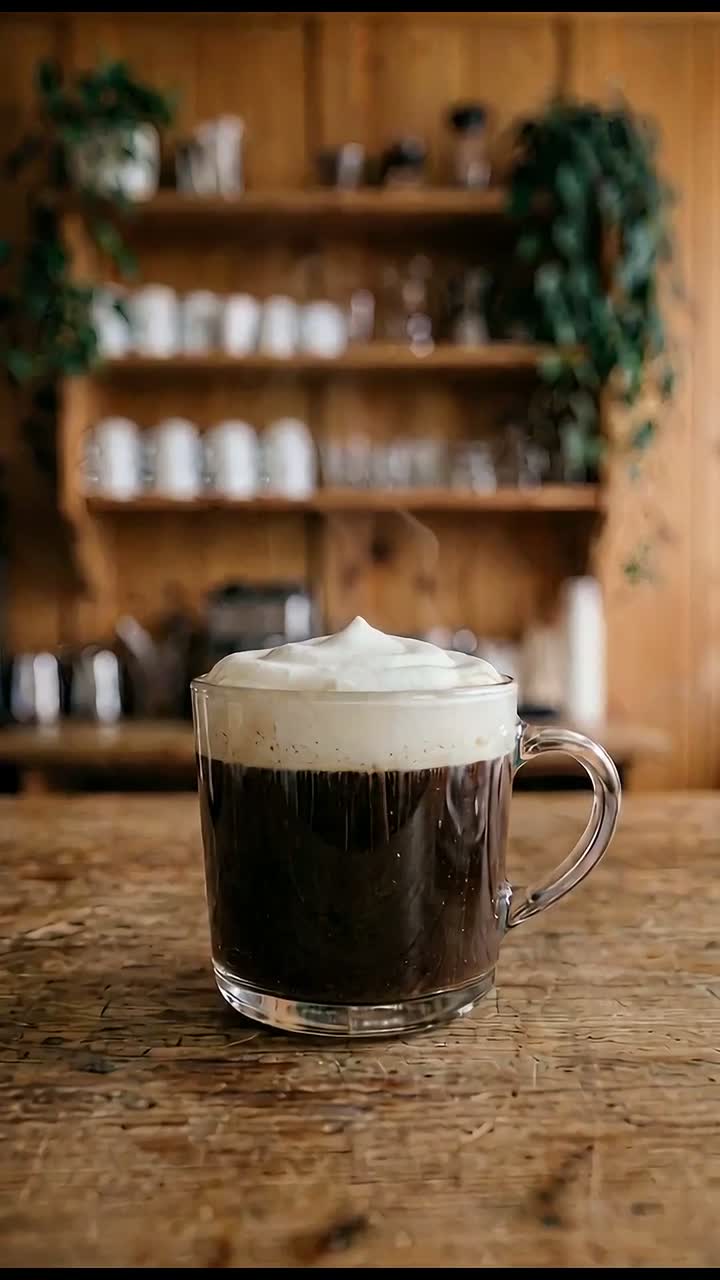
An Austrian coffeehouse preparation tops black coffee with a generous layer of whipped cream. This single-serving home version keeps the contrast between the coffee and cream.
The story behind the cup
Einspänner is part of Vienna’s vocabulary of café drinks: dark coffee topped with a generous cap of whipped cream. The contrast between hot coffee and cool cream makes it feel both like a drink and a small indulgence. Austria’s coffeehouse tradition values time at the table—conversation, reading and lingering over a cup. This recipe offers a taste of that setting without requiring an elaborate dessert.
Combine the espresso and hot water in a heatproof glass. Sweeten the coffee if desired.
Spoon the cream on top and serve immediately.
One home preparation inspired by the Viennese coffeehouse style. The quantities are suggested amounts, not a formula from the cultural source. Contains milk.
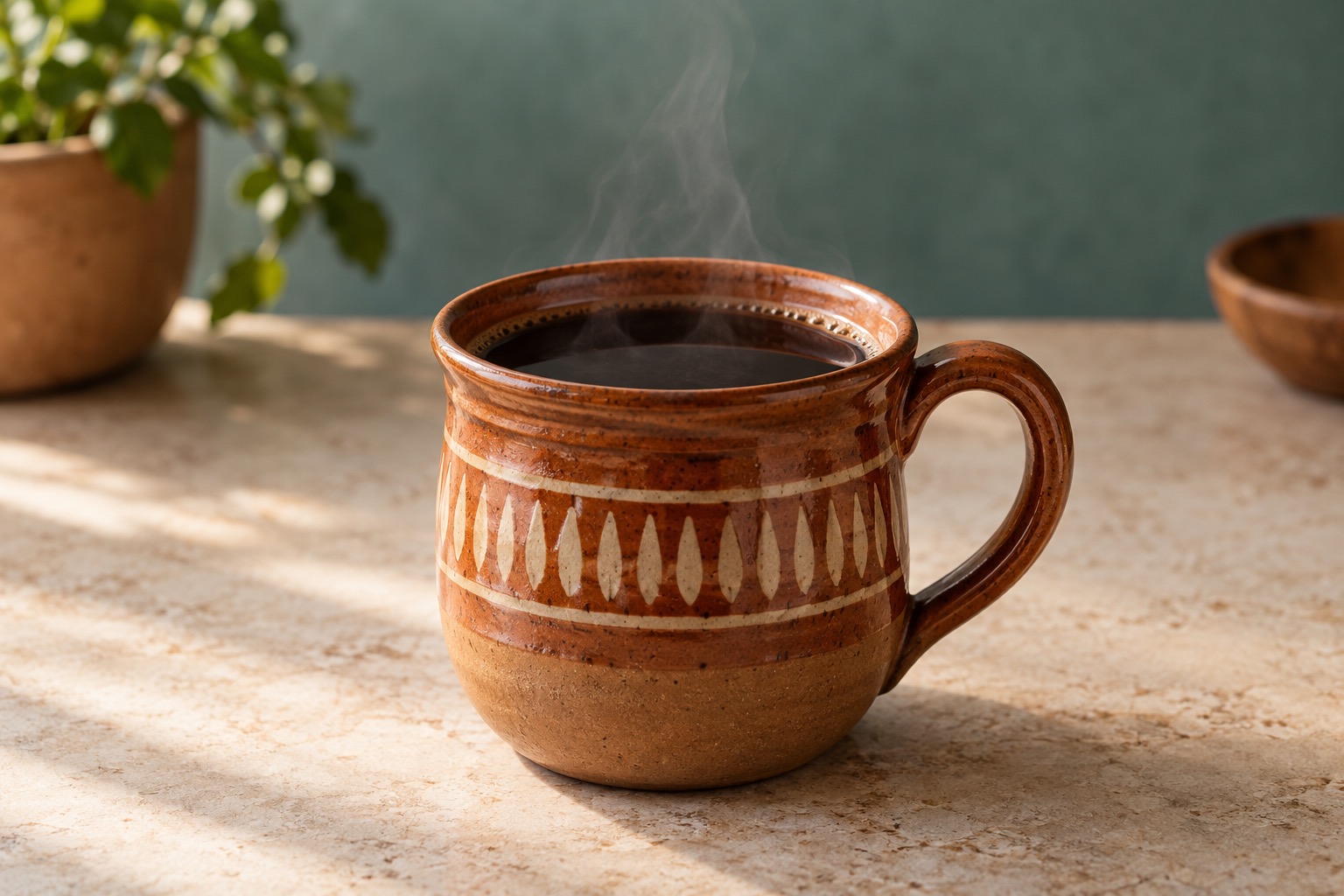
Café de olla combines coffee with cinnamon and piloncillo, an unrefined cane sugar. Our small-batch home adaptation can be made in a regular saucepan.
The story behind the cup
Café de olla takes its name from the pot used to prepare it. Cinnamon and piloncillo, an unrefined cane sugar, give this Mexican coffee its characteristic warmth and deep sweetness. It is a communal pot-style preparation rather than an espresso-bar drink. Household recipes differ, but the combination of coffee, spice and cane sugar is the thread connecting them; our version is adapted from Mexican cook Pati Jinich.
Small saucepan with lid, fine strainer (or paper coffee filter in a holder), heatproof jug and two heatproof cups.
Ingredients
480 ml water
1½ tablespoons medium-ground coffee
2 tablespoons grated piloncillo, or brown sugar
¼ cinnamon stick
Make your coffee
Bring the water to a boil in a small pan. Lower the heat and add the coffee, sugar and cinnamon.
Simmer gently for 10 minutes, partially covered. Remove from the heat, cover and let stand for 5 minutes.
Strain the coffee into two heatproof cups. Taste and adjust sweetness if needed.
Makes two small servings. A quarter batch of Pati Jinich’s recipe, using a rounded 240 ml cup conversion. Brown sugar gives a different flavor from piloncillo.
Recipe reference: Pati Jinich · Café de olla. Home preparation adapted from the source; methods and preferences vary.
Associated with American cowboy and camp cooking, this method brews grounds directly in a pot. This small-pot home adaptation follows the boil, rest and cold-water settling approach demonstrated by cowboy cook Kent Rollins.
The story behind the cup
Cowboy coffee makes sense where there is a fire, a pot and little else. The grounds brew directly in the water, and careful settling and pouring replace a paper filter. Chuckwagon cook Kent Rollins keeps this practical outdoor approach alive in his own method. Its attraction is simplicity and sharing a hot pot in camp; there is no need to treat every modern camping variation as a historical rule.
Saucepan or stovetop-safe coffee pot, tablespoon, two heatproof cups and optional paper coffee filter in a supporting holder.
Ingredients
480 ml cold drinking water
2 level tablespoons coarsely ground coffee (a mild starting point; increase to taste)
30 ml cold drinking water, reserved for settling
Make your coffee
Put the 480 ml water and coffee grounds in a saucepan with plenty of room above the water. Stir to wet the grounds.
Bring to a boil on the stove, then reduce the heat to maintain a controlled gentle boil for 3 minutes. Watch the pot so it does not boil over.
Remove from the heat and leave undisturbed for 1–2 minutes. Gently pour the reserved 30 ml cold water around the inside edge of the pot, then let the grounds settle for another minute.
Pour slowly into two small cups, keeping the settled grounds and the last splash of coffee in the pot. If you prefer less sediment, pour through a paper coffee filter.
Makes two small servings. A smaller home adaptation of Kent Rollins’s boiled-coffee method, with a shorter boil and a small settling-water addition. Some water remains with the grounds or evaporates.
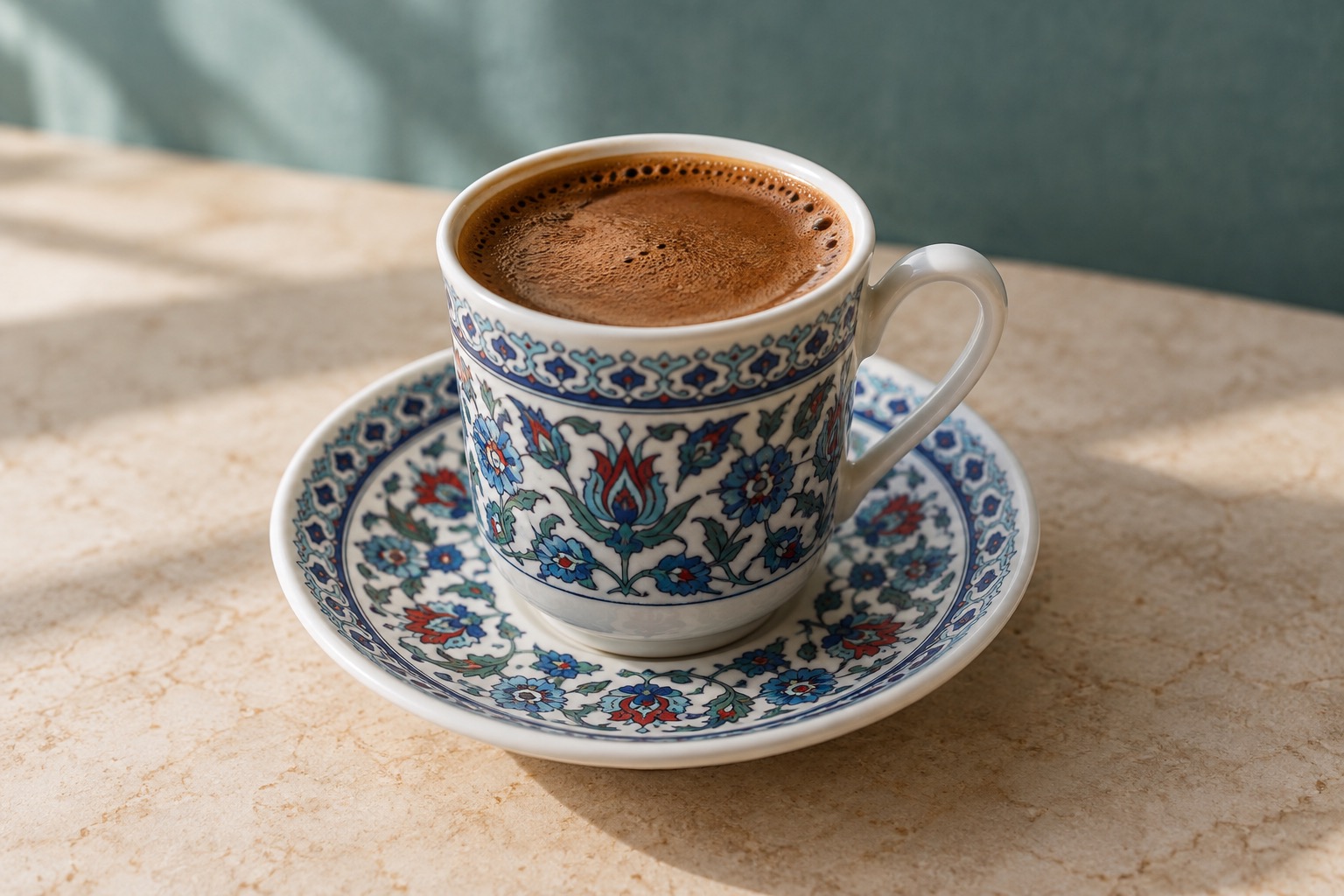
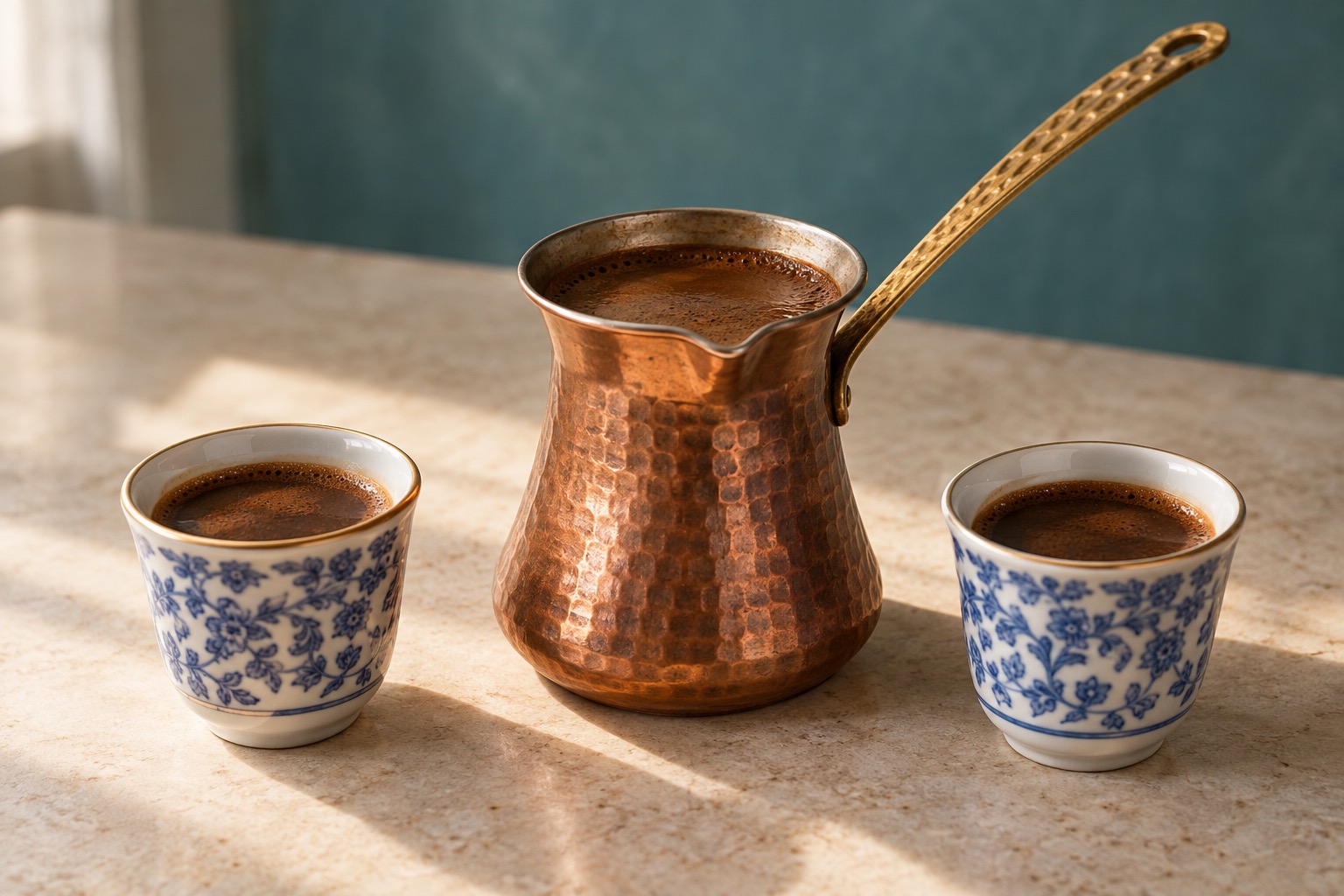
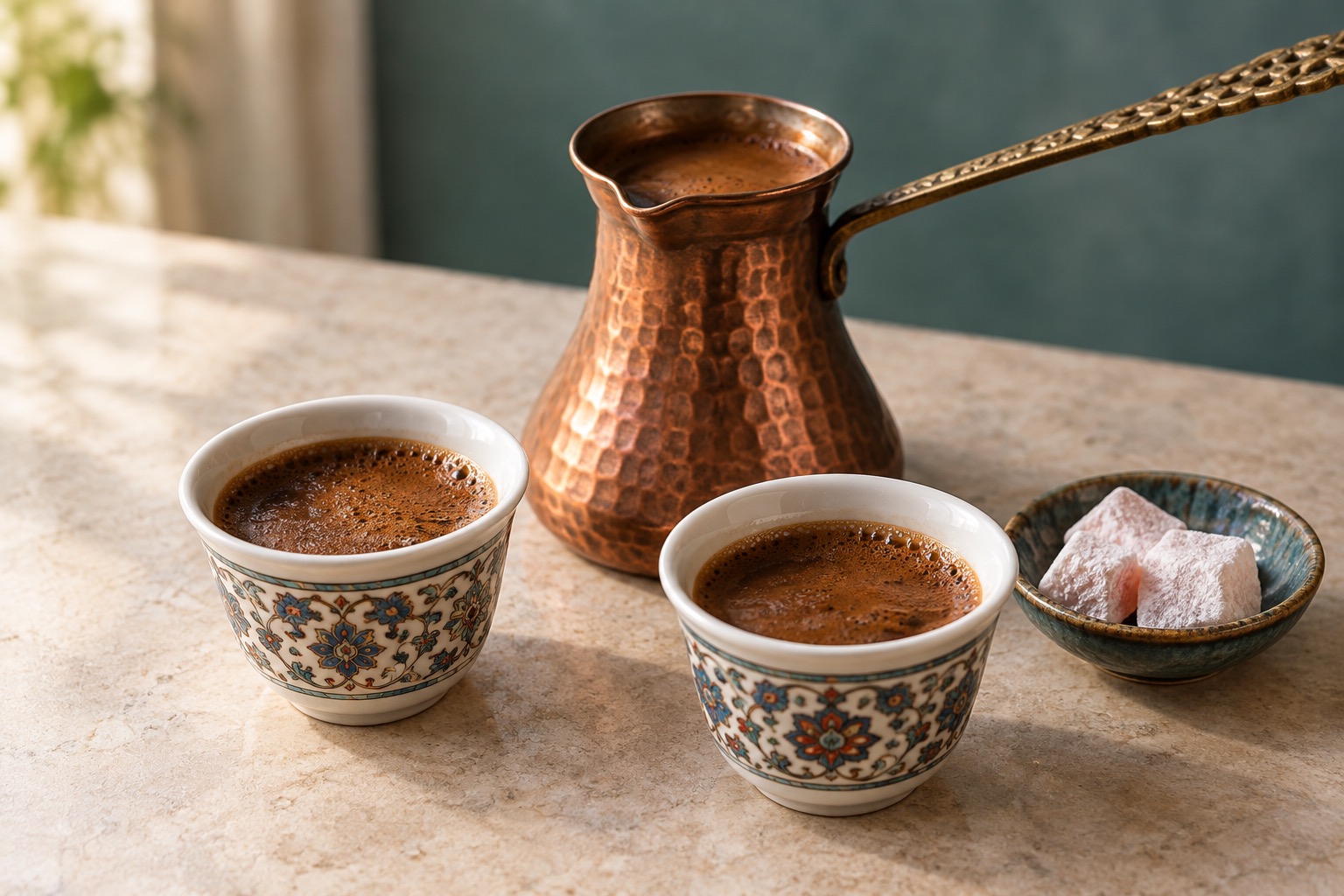
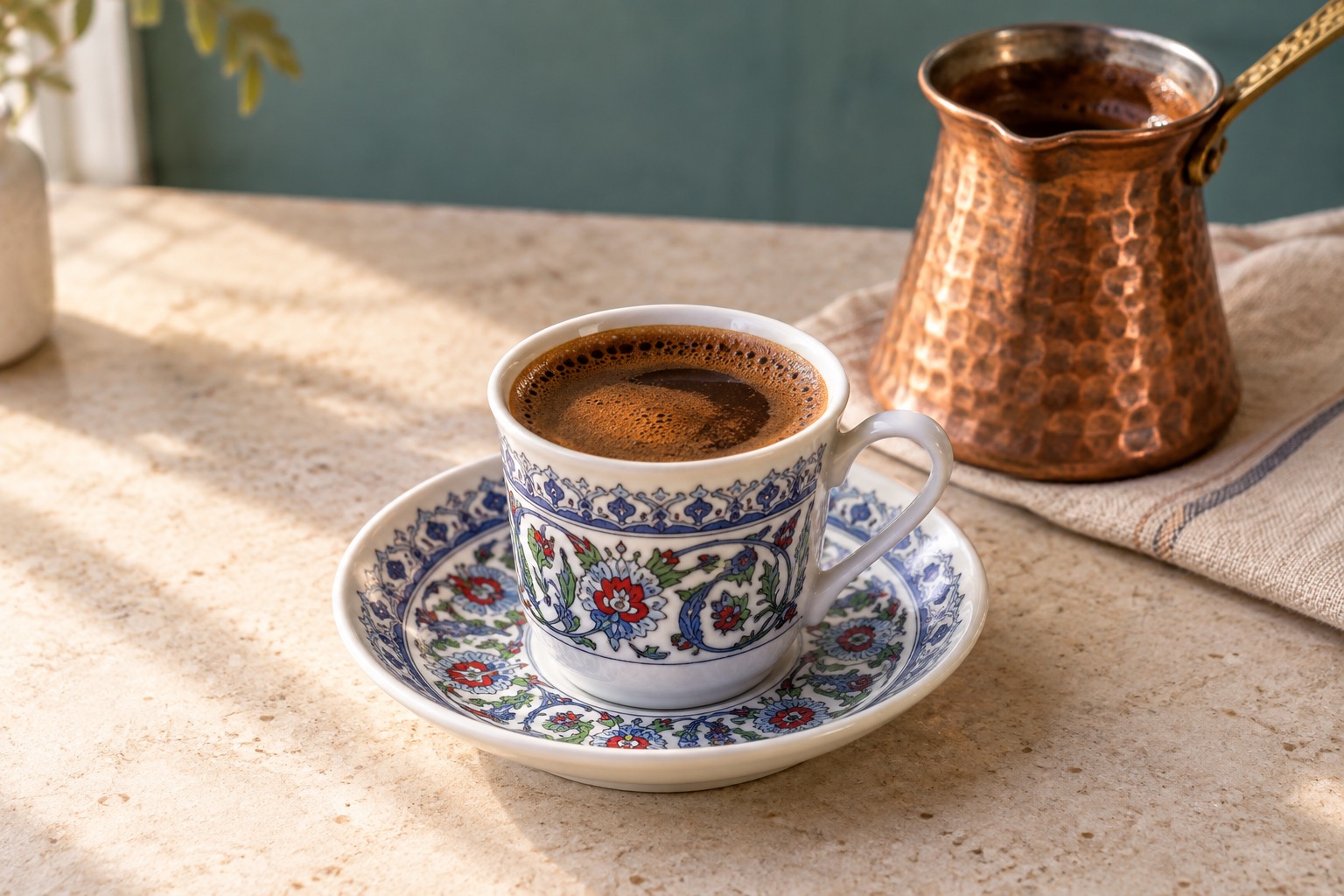
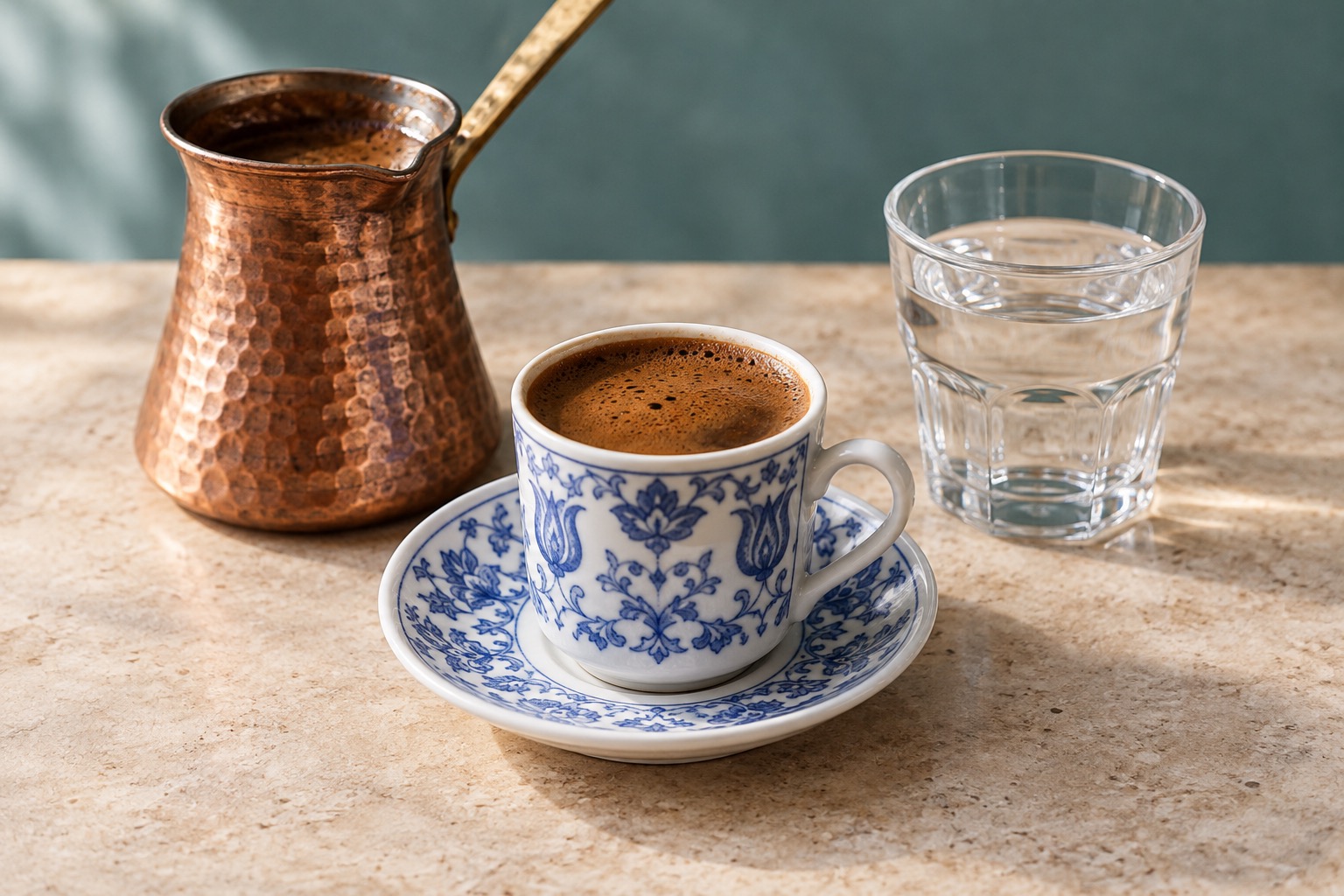
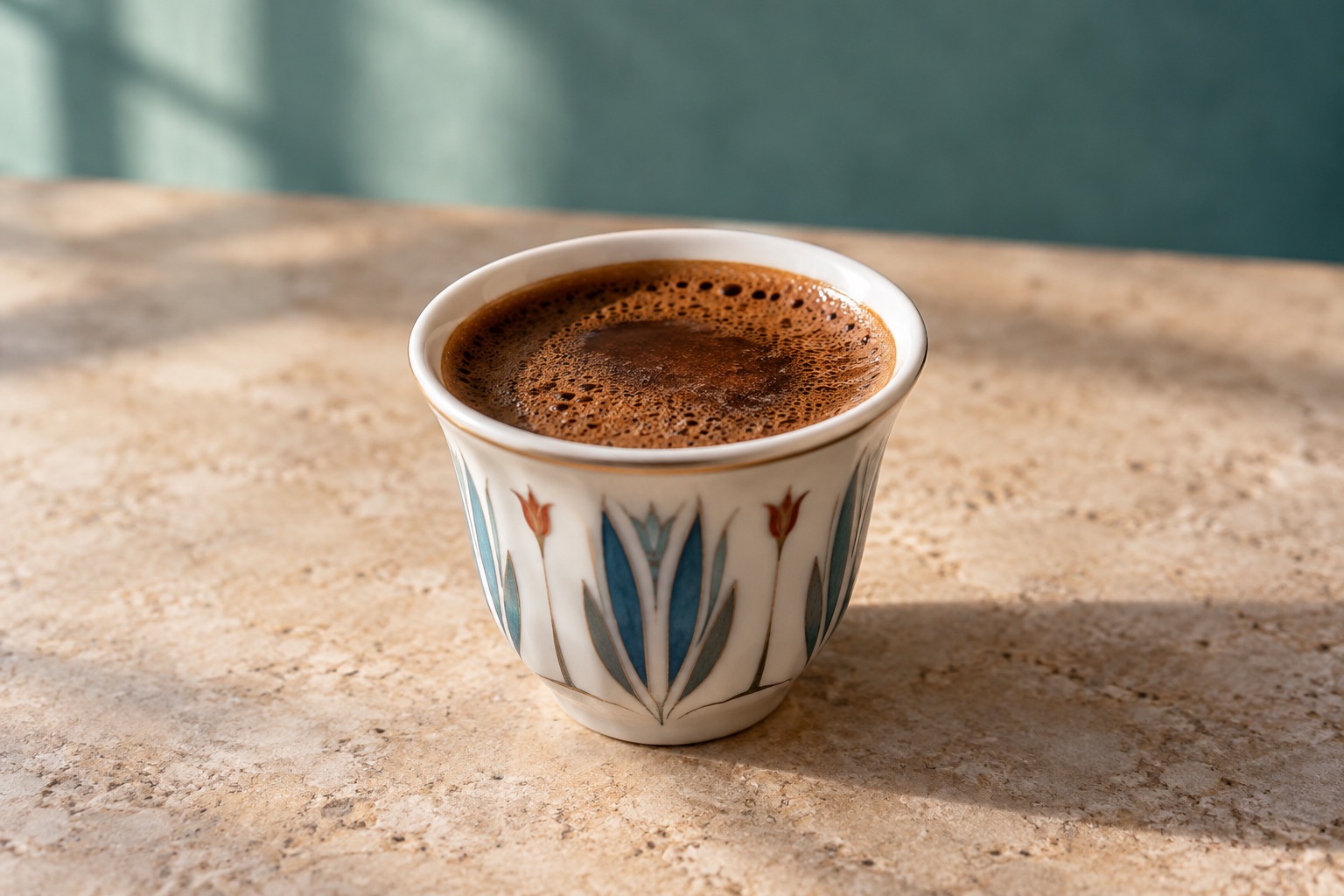
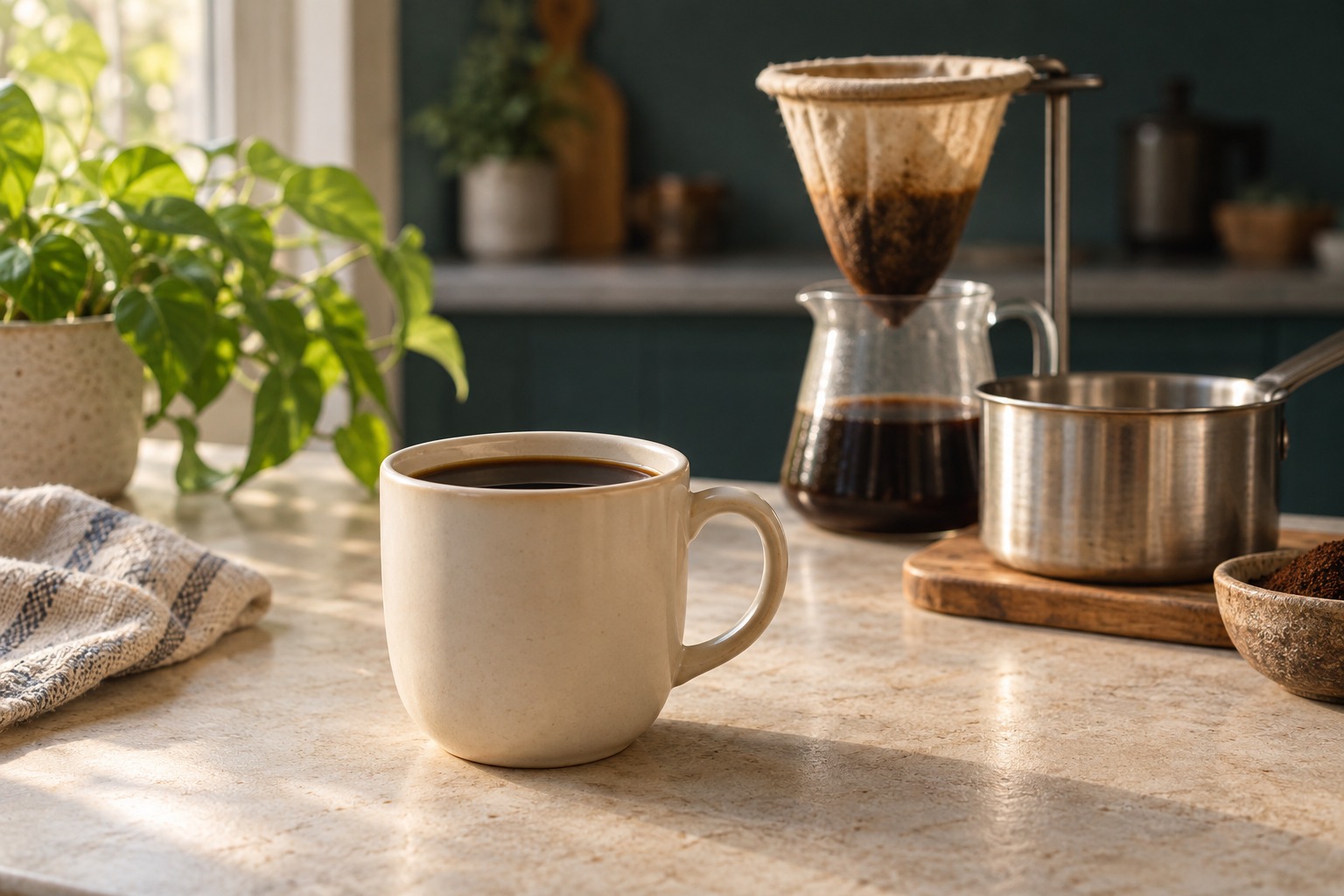
Very finely ground coffee heated slowly in a cezve, served with its foam and allowed to settle.
The story behind the cup
Turkish coffee is both a brewing method and a social tradition. Very finely ground coffee is heated slowly, then served in small cups with its grounds still present. UNESCO recognises the culture around it: hospitality, conversation, family occasions and even reading the settled grounds. The leisurely pace matters. Let the sediment settle and enjoy the liquid above it, rather than expecting the clean finish of filtered coffee.
Cezve, measuring utensils and suitable heatproof cups.
Ingredients
1 heaped teaspoon powder-fine Turkish coffee
1 Turkish serving cup cold water, approximately 60–70 ml
Sugar to taste
Make your coffee
Stir coffee, water and optional sugar in a small cezve before putting it on low heat.
Heat gently without further stirring. As foam forms and rises, lift the pot off the heat and spoon some foam into the serving cup.
Briefly return to low heat if needed, removing it at the first rise before it boils over. Rest 1–2 minutes, pour gently over the foam, and allow sediment to settle before sipping. Leave the grounds in the cup.
Measure the water with the serving cup; the metric range is approximate. Related stovetop methods are shared across the eastern Mediterranean.
Recipe reference: yummyistanbul.com. Home preparation adapted from the source; methods and preferences vary.
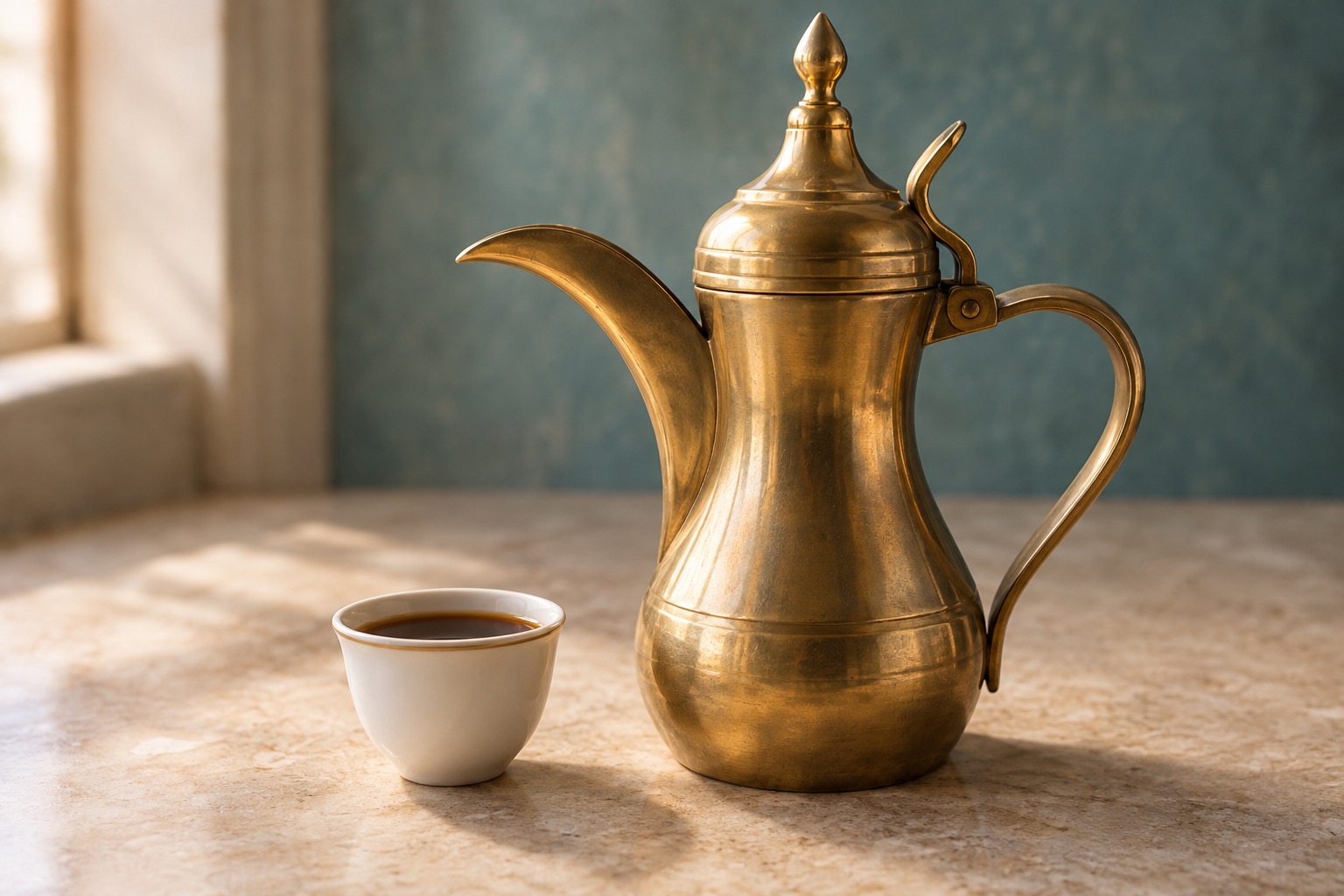
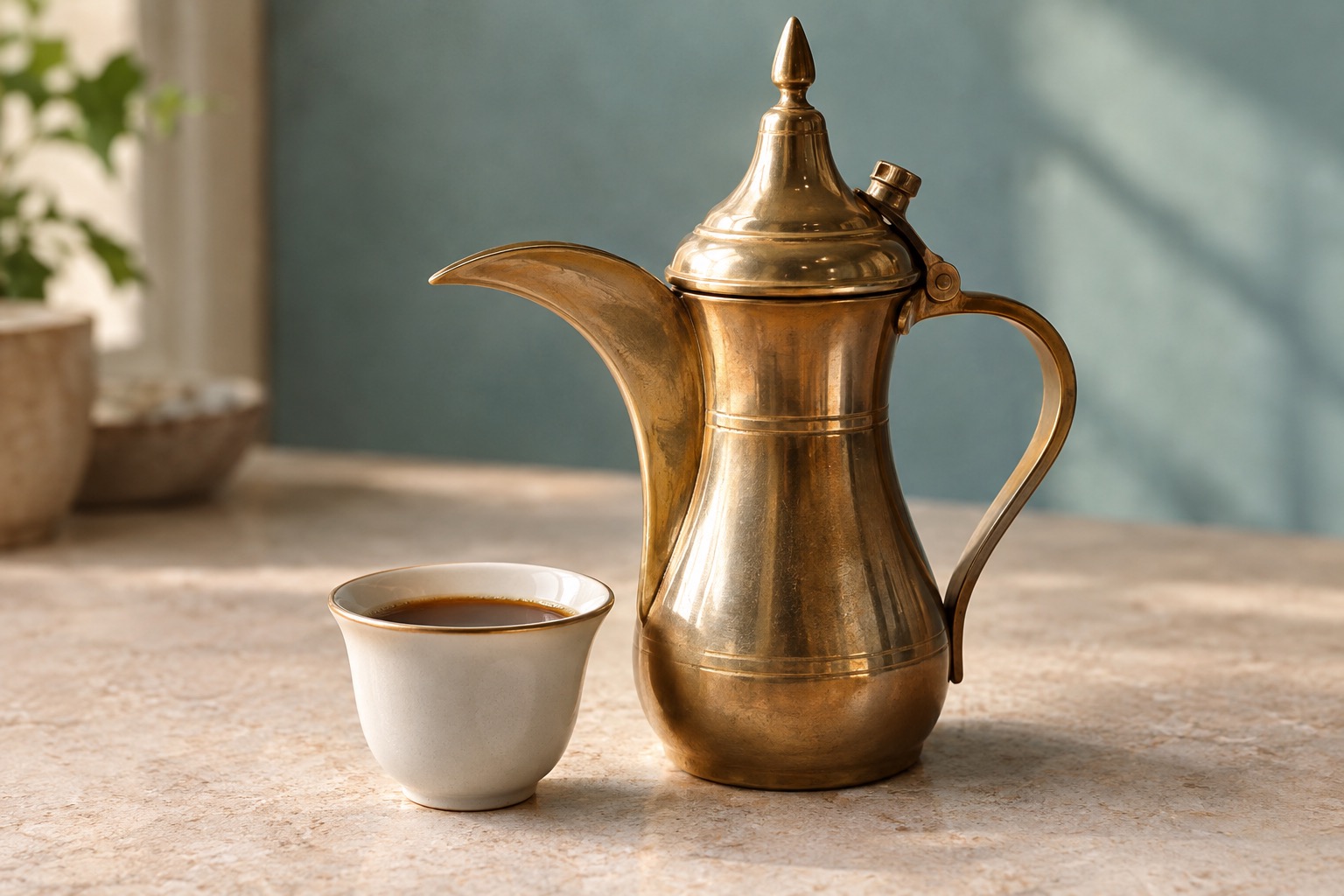
Spiced Arabic coffee poured from a dallah into small handleless cups.
The story behind the cup
Gahwa is closely connected with welcoming guests. UNESCO recognises Arabic coffee as a shared tradition of generosity across several countries, including the United Arab Emirates. Small servings make room for conversation and repeated offers of hospitality. Cardamom gives this version its aromatic character, but roast colour and spices vary by place and household. It is one expression of a regional tradition, not a recipe exclusive to one country.
At least 1 litre saucepan with lid, stove, fine strainer, preheated insulated serving flask, measuring utensils and small heatproof cups.
Ingredients
720 ml water
3 tablespoons coarsely ground Arabic coffee
1 tablespoon cardamom, ground or crushed
5–6 cloves, optional
Small pinch saffron, optional
1 teaspoon rose water, optional
Make your coffee
Bring water to a boil and add coffee; gently boil for 10–12 minutes.
Add crushed cardamom and optional cloves, then cook for another five minutes.
Remove from heat, cover and rest one minute. Strain into a preheated flask containing optional saffron and rose water; steep 5–10 minutes before serving.
A roughly 720 ml batch converted from three cups. Gulf households use different roast levels and spice blends.
Recipe reference: arabiczeal.com. Home preparation adapted from the source; methods and preferences vary.
A cardamom-scented coffee within the wider Arabic hospitality tradition.
The story behind the cup
Saudi coffee has a strong place in hospitality, with preparation and spice preferences varying across the country. Cardamom is prominent in this version; other regional preparations may include saffron or cloves. The small cup is part of a welcoming ritual rather than a large, hurried serving. Saudi coffee also belongs to the wider Arabic coffee tradition recognised by UNESCO for its connection with generosity and social life.
At least 1.5 litre saucepan, stove, scale, measuring jug, spoon and small heatproof cups.
Ingredients
800 ml water
40 g medium-roasted ground coffee
30 g ground cardamom
Make your coffee
Bring 800 ml water to a boil in a saucepan with ample headroom; stir in the ground coffee.
Maintain a controlled gentle boil for about 17 minutes, adjusting heat to prevent overflow.
Stir in the cardamom and cook for 2 minutes. Remove from heat and let settle for 2 minutes. Pour gently into small cups, leaving the thick sediment behind; batch yield is less than 800 ml after evaporation.
A strongly cardamom-forward preparation based on Saudipedia’s recipe. Roast and spice preferences vary across regions.
Recipe reference: saudipedia.com. Home preparation adapted from the source; methods and preferences vary.
Powder-fine coffee warmed in an ibrik, with sugar and sometimes cardamom.
The story behind the cup
This Lebanese preparation uses a small long-handled pot and finely ground coffee, a method shared in different forms across the region. The coffee is served with its sediment, so patience is part of drinking it. The pot, often called a rakweh, is a familiar kitchen tool rather than a specialist café machine. Sweetness and additions vary between households; the recipe here is a home preparation, not a universal Lebanese formula.
Rakweh, stove, teaspoon and two small heatproof cups.
Ingredients
140 ml water, approximately two small demitasse cups
4 heaped teaspoons very finely ground coffee
6 pierced cardamom pods
2 teaspoons sugar, optional
Make your coffee
Heat water, pierced cardamom pods and optional sugar in a rakweh large enough to leave headroom. Stir to dissolve sugar.
When small bubbles appear, lift off heat and add coffee. Return to low heat and stir gently until foam starts to rise; lift off heat before overflow and wait for the foam to subside.
Return to low heat and repeat the rise-and-remove cycle twice. Remove the pods with a spoon, divide among two small cups, and let sediment settle for 1–2 minutes before sipping.
Makes two small servings. Use your serving cups to measure the water; approximately 70 ml each is a starting point. Related unfiltered methods are shared across the region.
Recipe reference: plantbasedfolk.com. Home preparation adapted from the source; methods and preferences vary.
A spiced infusion of dried coffee-cherry husks rather than roasted coffee beans.
The story behind the cup
Qishr uses the dried husks of coffee fruit rather than the roasted beans most drinkers expect. In this Yemeni preparation, ginger and other spices create a fragrant, tea-like drink. It is a useful reminder that a coffee harvest yields more than beans. Family recipes differ in sweetness and spice, so qishr is best understood as a tradition with variations rather than one fixed mixture.
A recipe contributor's Moroccan-taught preparation combining coffee, milk, cinnamon, cumin and pepper.
The story behind the cup
This sweet, spiced milk coffee is a particular home recipe associated with Morocco, not a claim that all Moroccan coffee is prepared this way. Milk carries the spice aromas and softens the coffee, making the result quite different from a short black cup. Its interest lies in that combination of familiar kitchen ingredients. Think of it as one household’s approach to a comforting drink rather than a national standard.
Saucepan, measuring utensils and suitable heatproof cups.
Ingredients
500 ml milk
60 ml water
2 tablespoons instant coffee granules
1 teaspoon ground cinnamon
½ teaspoon ground cumin
¼ teaspoon ground black pepper
Sugar to taste
Make your coffee
Mix milk, water, instant coffee and spices in a saucepan with ample headroom.
Heat over medium-low heat, stirring frequently, until steaming and small bubbles appear around the edge. Remove before the milk rises or boils over; use the visual cue rather than a fixed time.
Stir in sugar to taste and divide between two mugs. Ground spices remain in the drink; stir again if they settle.
A household-style preparation passed on by Mohammed to the recipe’s author. The water quantity is converted from ¼ cup; spoon measures are retained.
Recipe reference: food.com. Home preparation adapted from the source; methods and preferences vary.
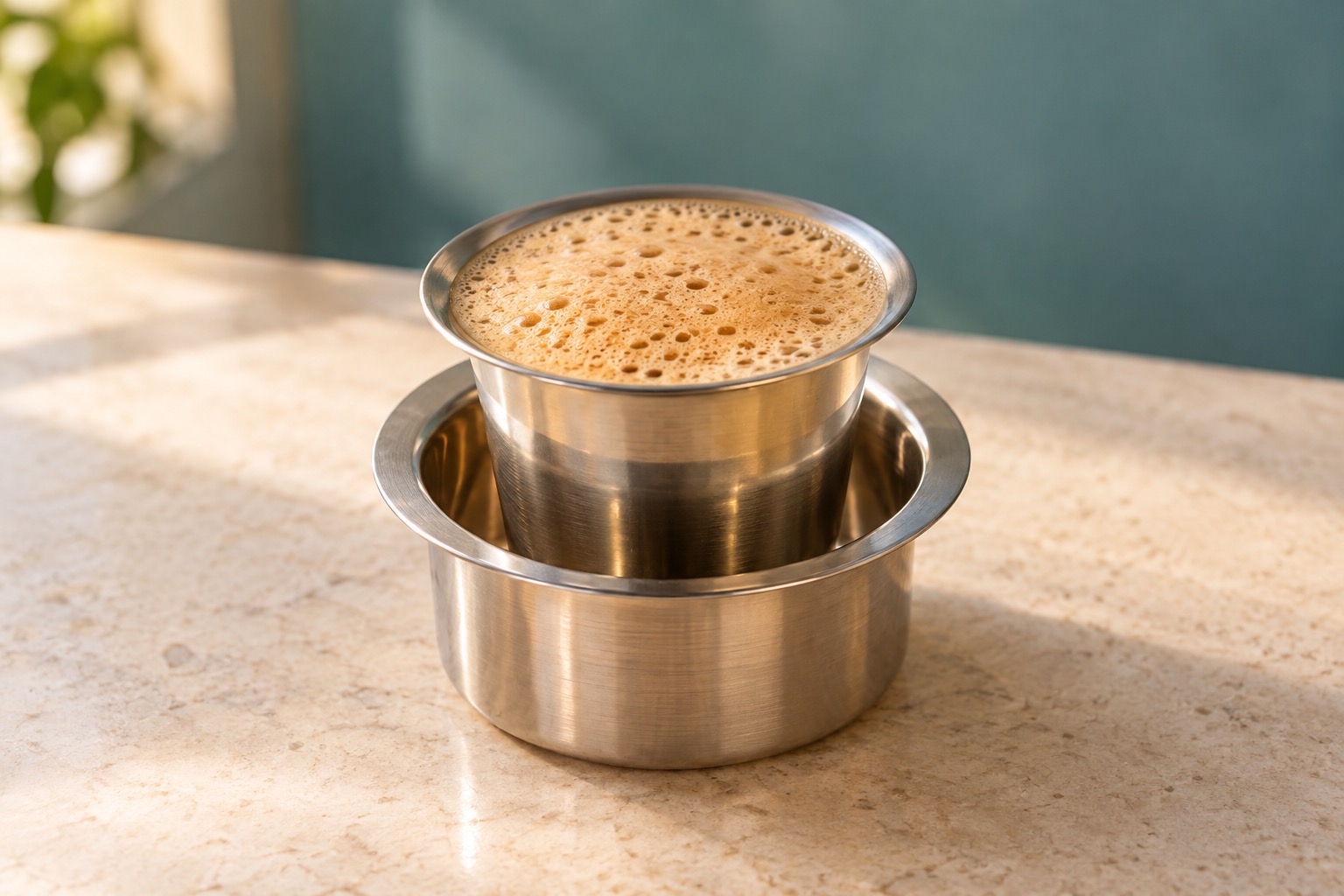
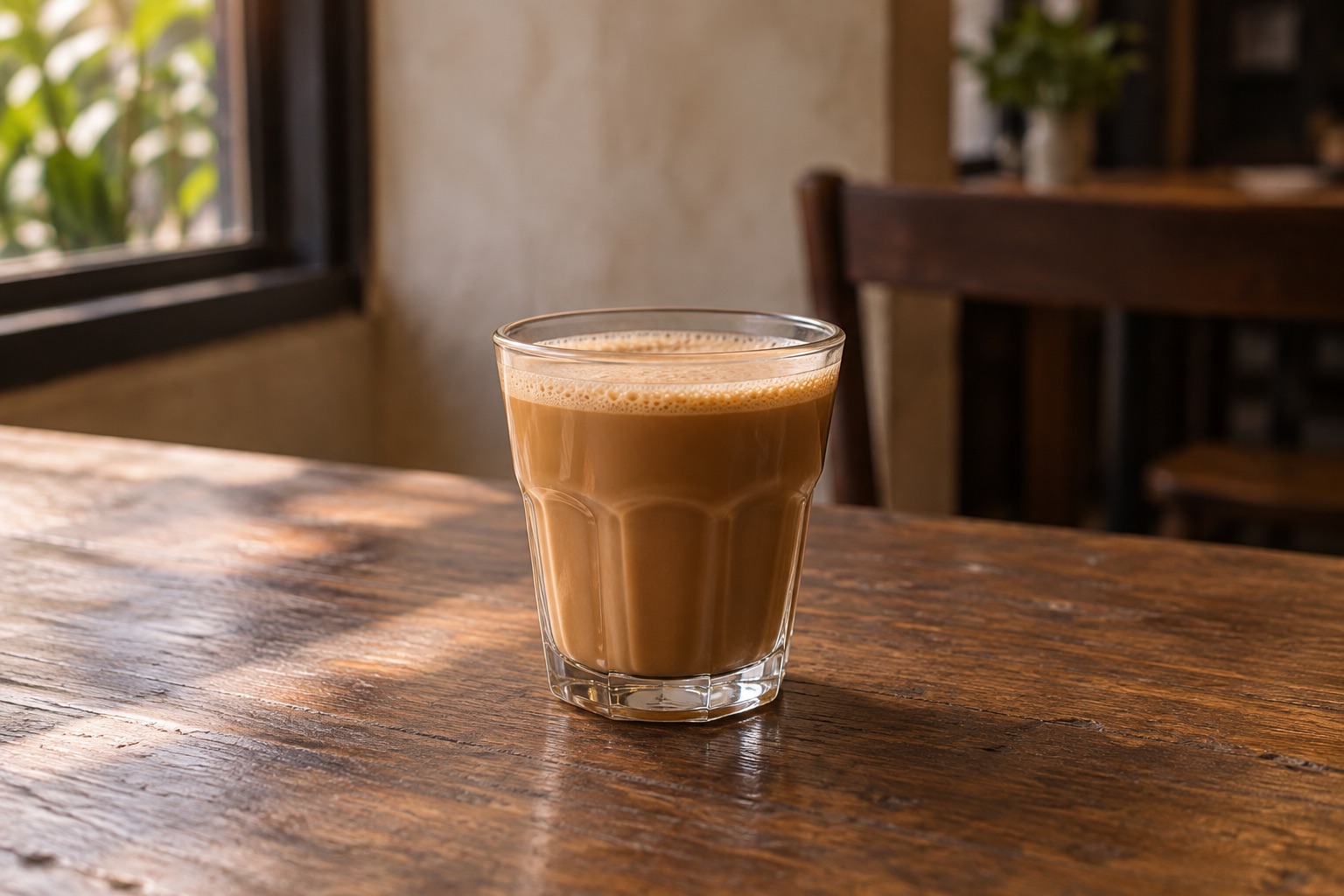
Coffee decoction from a metal filter mixed with hot milk and sugar, then poured between vessels to create foam.
The story behind the cup
South Indian filter kaapi starts with a concentrated decoction made in a metal filter, then combines it with hot milk and sugar. It is a familiar partner to breakfast foods such as idli and dosa. The tumbler and small bowl, or davara, are distinctive parts of its service; pouring between them mixes and aerates the drink. Some blends include chicory, which contributes to the characteristic flavour.
South Indian coffee filter, kettle, small milk pan, spoon, measuring jug, two tumblers and davara or handheld frother.
Ingredients
3 teaspoons ground filter coffee (4 teaspoons for a stronger decoction)
240 ml water
180 ml whole milk, or as needed
2 teaspoons sugar per serving, or to taste
Make your coffee
Assemble the South Indian filter over its lower chamber. Level the ground filter coffee, fit the pressing disc gently, and do not compact it firmly.
Bring the measured 240 ml water to a boil. Add it to the top chamber without overflowing, cover and let drain for about 10–12 minutes or until dripping slows. Use a filter sized for this batch; add water in stages if needed.
Heat the 180 ml milk in a small pan until steaming, stirring. For each of two servings, combine 60–80 ml decoction with 90 ml milk and sugar to taste. Any extra decoction can strengthen the cups to taste.
Pour carefully between a tumbler and davara 2–3 times to foam, or use a handheld frother in the cup. Serve immediately.
Use 3 teaspoons of coffee per cup of brewing water, or 4 for a stronger decoction. You may not need all the decoction for one serving. Cup volumes are rounded metric conversions.
Recipe reference: vegrecipesofindia.com. Home preparation adapted from the source; methods and preferences vary.
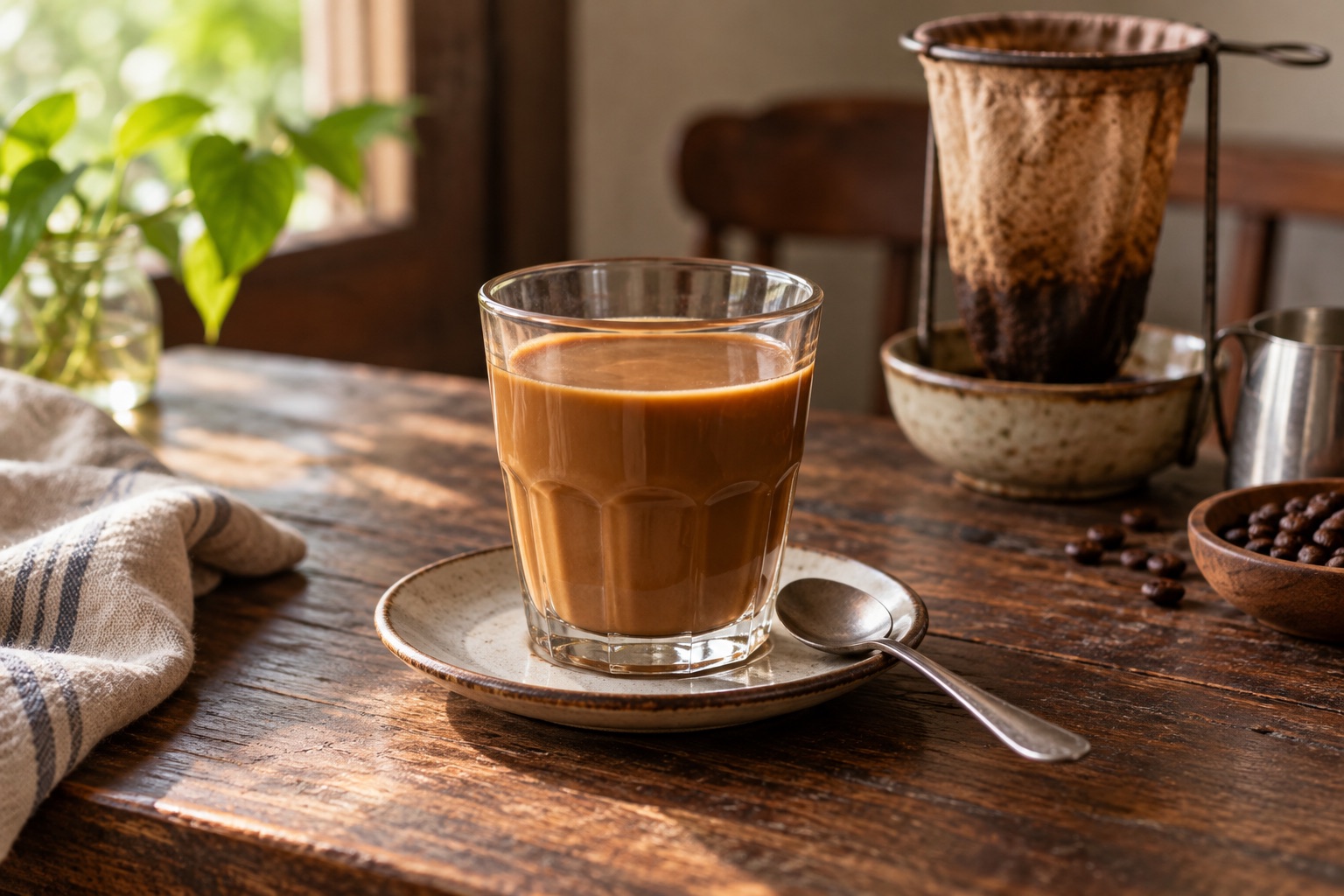
Strong coffee dripped through a phin, sweetened with condensed milk and served over ice.
The story behind the cup
Cà phê sữa đá brings together strong coffee, sweetened condensed milk and ice. A phin filter makes the brewing visible and unhurried, with drops falling directly into the cup before mixing. Vietnam’s coffee culture includes pavement cafés and informal places to pause, and this cold, sweet preparation suits that everyday setting. The balance depends on the coffee and milk used; it is not simply a Western iced latte with a different name.
240 ml hot water, available for warming and filling the phin
2 teaspoons sweetened condensed milk, or to taste
Ice to fill the serving glass
Make your coffee
Bring the available water to a boil. Use a little to warm the phin and brewing cup, then discard that rinse water. Add the coffee to the phin and level it.
Fit the insert gently without compressing the grounds hard. Add just enough hot water to wet the coffee, wait about 20–30 seconds, then fill the phin to its manufacturer's working capacity and cover. The 240 ml is available water, not a direction to brew it all.
Let drip about 3–5 minutes. If it stalls or runs very fast, adjust the grind or insert pressure for the next brew. Stir condensed milk into the brewed coffee.
Cool briefly, then pour into a separate glass filled with ice. Serve one portion.
Use 4 teaspoons of coffee. The hot water includes preheating and filling: add only what the phin holds after wetting the grounds. It does not produce 240 ml of finished coffee.
Recipe reference: hungryhuy.com. Home preparation adapted from the source; methods and preferences vary.
Traditional-style Thai iced coffee made with a dark coffee blend, condensed milk and an evaporated-milk finish.
The story behind the cup
Gafae yen is a Thai iced coffee style associated with street-side drink sellers. Strong coffee has to hold its own against milk, sweetness and a generous serving of ice. That bold contrast is central to the drink. Vendors and households adjust their mixtures, so this recipe represents a street-style home adaptation rather than a single national formula. It is intended to be mixed and enjoyed cold.
Hot coffee brewed directly onto ice for immediate chilling.
The story behind the cup
Japanese-style iced pour-over brews hot coffee directly onto ice. The hot water extracts the coffee while the ice cools and dilutes it immediately, producing a different result from coffee steeped cold for hours. The measured relationship between brewing water and ice is what makes the method work. This is a brewing approach associated with Japanese iced-coffee practice, not a claim that one inventor created every version.
Pour-over dripper and paper filter, kettle, heatproof server of at least 600 ml, scale, timer, measuring jug and two glasses.
Ingredients
30 g medium-ground coffee
370 ml water at about 96°C
150 g ice, plus extra for serving
Extra hot water to rinse the paper filter
Make your coffee
Rinse the filter in the dripper and discard rinse water. Put 150 g ice in a heatproof server, set dripper above it and add coffee.
Start the timer as you pour 60 ml of the measured brew water over all grounds. At 40 seconds add another 60 ml; wait until 1 minute 20 seconds.
Pour the remaining 250 ml in gradual additions, keeping the water below the dripper rim. Aim for all water to drain through at about 4–5 minutes total; grind and dripper affect timing.
Remove dripper, swirl the server to melt and mix the ice, and divide between two glasses over extra ice.
Makes two servings. For course practice, see R19 Iced Pour-Over. This Japanese-style version also brews hot coffee directly onto ice.
Recipe reference: justonecookbook.com. Home preparation adapted from the source; methods and preferences vary.
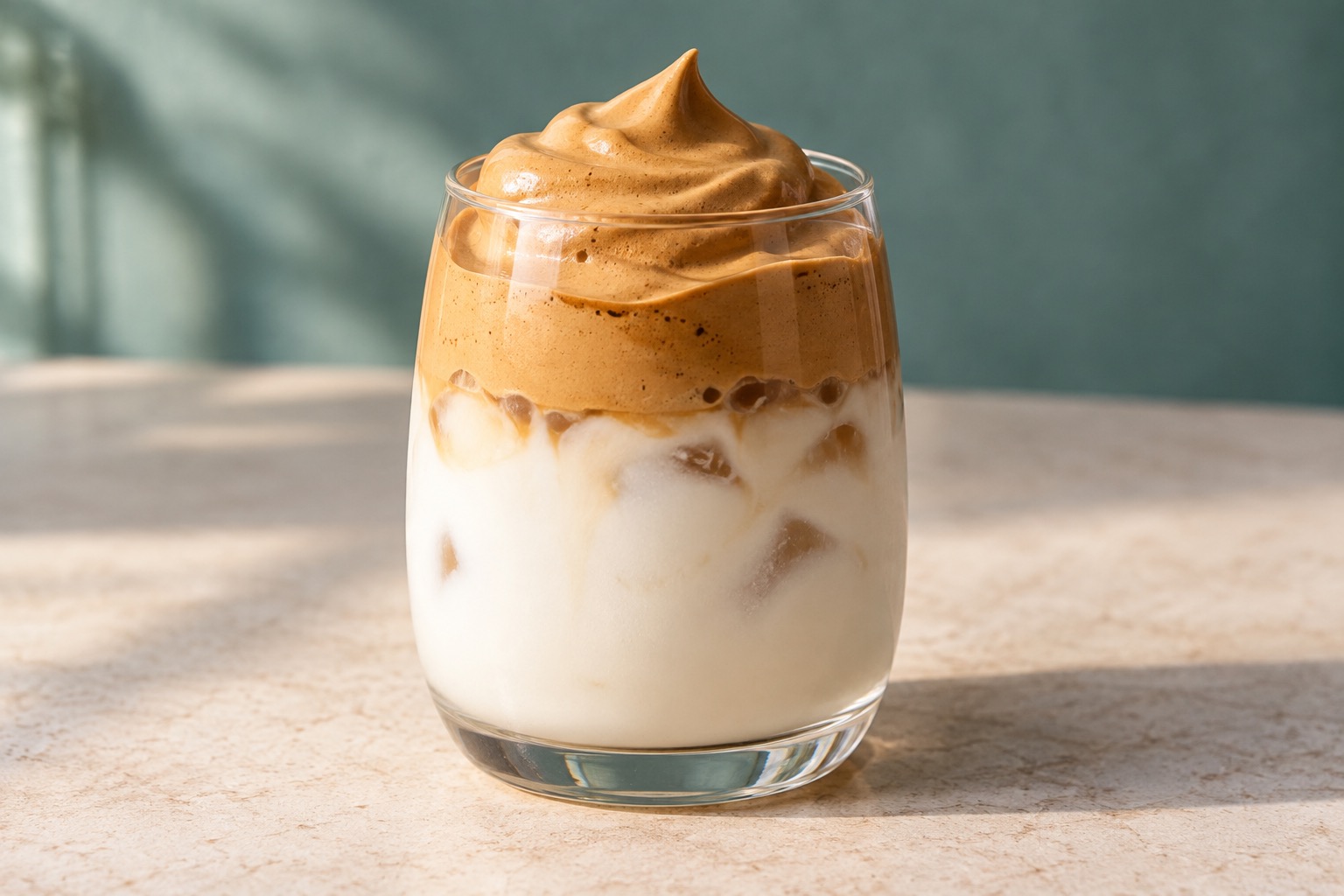
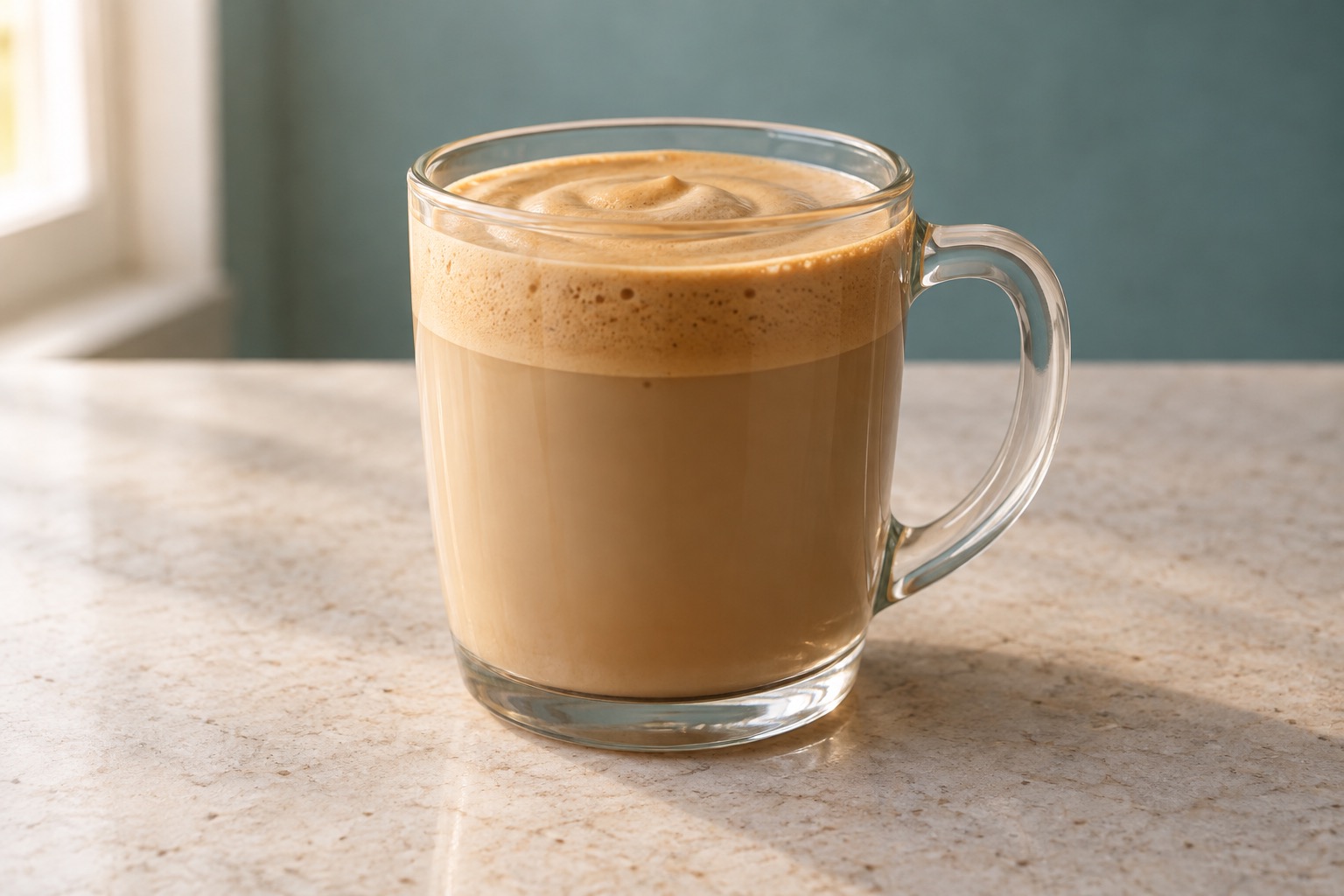
Whipped instant coffee spooned over milk; its Korean name and international popularity grew through the 2020 trend.
The story behind the cup
Dalgona coffee became internationally recognisable through its thick whipped topping and dramatic two-layer appearance. The name refers to the resemblance to Korean dalgona candy, rather than candy being a required ingredient. Instant coffee, sugar and water whip into a foam that sits above milk. Similar beaten-coffee methods also exist elsewhere, including South Asia, so the modern Korean-associated presentation should not be mistaken for the first-ever whipped coffee.
Bowl, whisk or electric mixer, measuring utensils and a serving glass.
Ingredients
1 tablespoon instant coffee granules
1 tablespoon sugar
15 ml hot water
180–240 ml milk
Ice, optional
Make your coffee
Beat instant coffee, sugar and hot water in a bowl until thick, pale and holding peaks, about 2–4 minutes with an electric mixer; hand whisking can take considerably longer.
Pour the milk into a glass of at least 350 ml, adding ice if desired and leaving space for foam.
Spoon the coffee foam on top and stir before drinking. Makes one generous serving.
Retain the spoon measures for the whipped mixture; milk volume is rounded. Similar whipped-coffee methods predate the Korean-named trend.
Recipe reference: mykoreankitchen.com. Home preparation adapted from the source; methods and preferences vary.
Nanyang-style coffee served with condensed milk in the kopitiam tradition.
The story behind the cup
Kopi is part of Singapore’s everyday kopitiam and hawker-centre culture. Ordering words communicate how you want it: plain kopi usually includes condensed milk, while other terms specify black coffee, evaporated milk or no sugar. Traditional coffee blends are designed for a strong, distinctive cup that stands up to these additions. Learning the order is part of understanding the culture, not just learning an ingredient list.
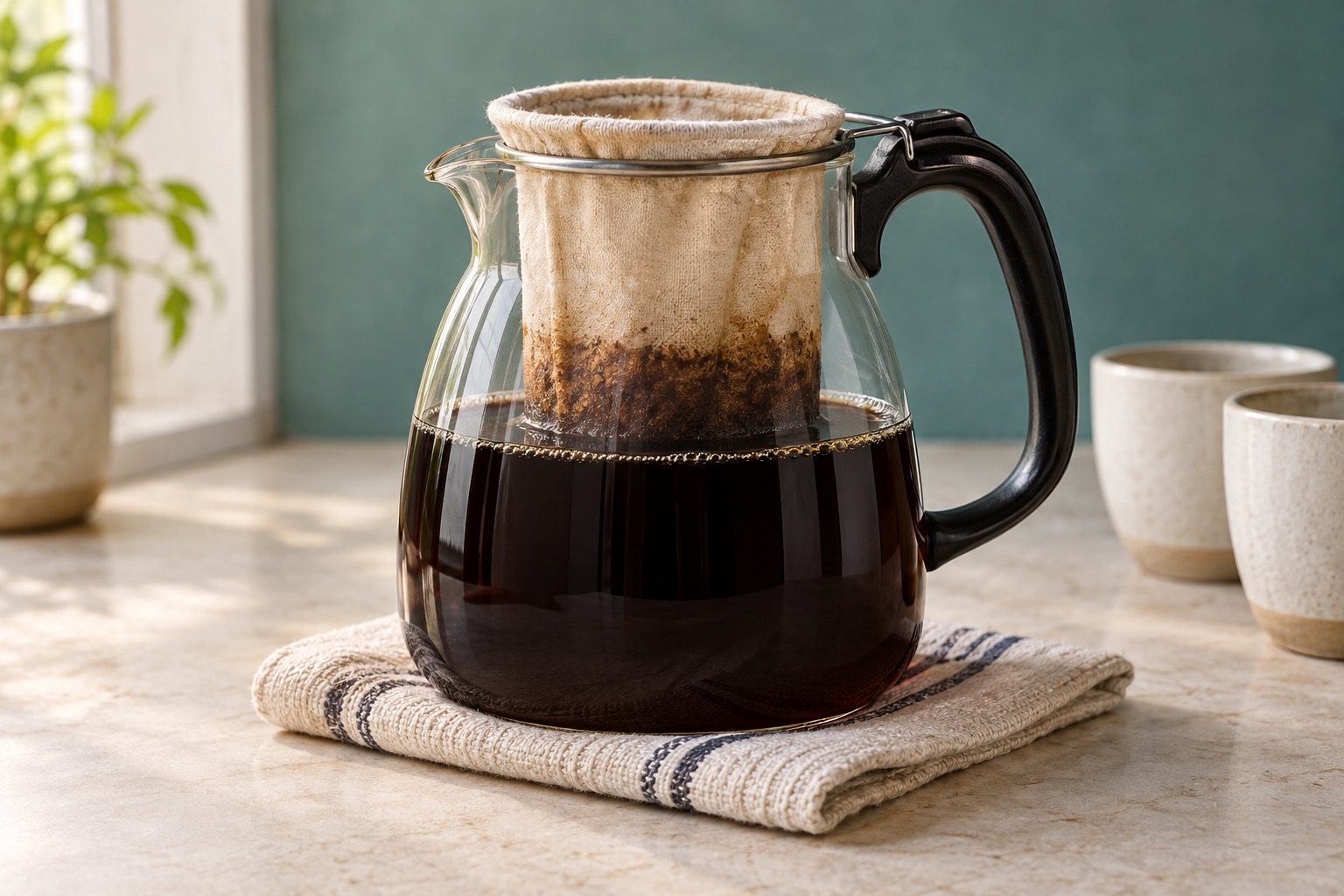
Cloth coffee filter with a stable holder, kettle, heatproof jug, measuring utensils, spoon and serving cup.
Ingredients
15 g traditional Nanyang coffee grounds
200 ml hot water
Sweetened condensed milk to taste
Make your coffee
Fit a clean cloth coffee filter in a stable holder over a heatproof jug. Add the 15 g coffee. This pour-through method is a home adaptation.
Heat the 200 ml water until just off the boil and pour gradually over the grounds in small additions, keeping liquid below the cloth rim. Let it drain completely.
Stir condensed milk into the coffee to taste and serve one cup.
Use 15 g coffee to 200 ml water; add condensed milk to taste. Kopi is commonly ordered with condensed milk. Nanyang coffee traditions are shared with Malaysia.
Recipe reference: killiney-kopitiam.com. Home preparation adapted from the source; methods and preferences vary.
A direct-in-the-cup coffee preparation in which grounds settle before drinking.
The story behind the cup
Kopi tubruk is an Indonesian way of brewing coffee directly in the drinking vessel. Hot water meets the grounds without a paper filter, leaving the sediment to settle at the bottom. Its simplicity makes the technique accessible at home as well as in informal coffee settings. Drink slowly and leave the muddy last mouthful behind; that sediment is part of the method, not a sign that the recipe failed.
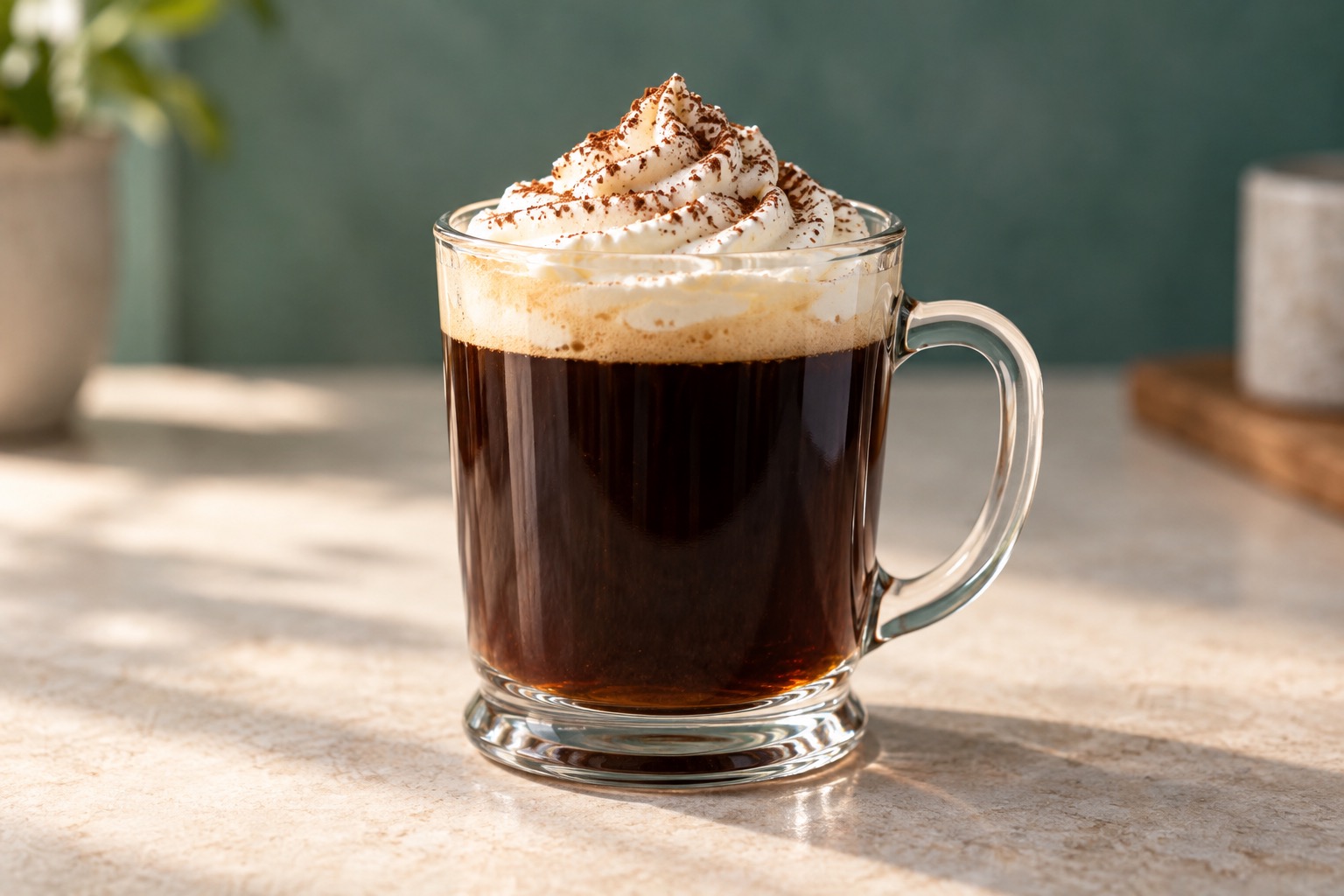
Hot coffee with Irish whiskey, brown sugar and a floating cream layer.
The story behind the cup
Irish coffee is associated with Joe Sheridan and Foynes in County Limerick in the early 1940s, where the story centres on warming tired travellers. Coffee, Irish whiskey and sugar are topped with cream, giving each sip a contrast of temperatures and textures. The cream belongs on top rather than being stirred in. It is an alcoholic coffee cocktail with a hospitality story, not an everyday substitute for a morning cup.
Coffee brewer, kettle, small bowl and whisk, spoon, measuring utensils and 250 ml heatproof glass.
Ingredients
150 ml strong hot coffee
40 ml Irish whiskey
4 g brown sugar
30 ml lightly whipped cream
Make your coffee
Lightly whisk cold cream in a small bowl until thickened but still pourable; measure 30 ml for the topping. Prepare 150 ml hot strong coffee using the linked base method.
Warm a heatproof glass of at least 250 ml with hot water and empty it. Add coffee and sugar, stir until sugar dissolves, then stir in whiskey.
Float the cream over the back of a spoon and serve immediately. Makes one drink.
One serving. Coffee, whiskey and cream volumes are practical home amounts for the Foynes-style method; glass sizes vary.
Recipe reference: ireland.com. Home preparation adapted from the source; methods and preferences vary.
Instant coffee shaken into a thick foam and lengthened with cold water.
The story behind the cup
Greek frappé is commonly traced to a demonstration at the 1957 Thessaloniki trade fair. Its defining ingredient is instant coffee, shaken or beaten with water to create a lasting foam. Served over ice, it became a recognisable part of relaxed Greek coffee drinking. Milk and sugar are matters of preference. It differs from freddo espresso, which starts with freshly brewed espresso rather than instant coffee.
Strong moka coffee folded into a pale foam whipped from sugar and the first coffee drops.
The story behind the cup
Café Cubano gets its pale, sweet foam from sugar beaten with the first drops of coffee, not from milk. A small serving can therefore deliver both intense coffee flavour and considerable sweetness. Cuban and Cuban-American coffee culture includes sharing coffee in small cups; a colada is associated with that social habit. A moka pot makes this home version accessible, while the sugar-beating step gives it its distinctive finish.
Moka pot, stove, heatproof mixing jug, teaspoon, measuring jug and 4–6 small cups.
Ingredients
Ground dark-roast coffee and water to fill your moka pot according to its instructions, targeting about 180 ml brewed coffee
50 g granulated sugar
Make your coffee
Prepare a moka pot expected to yield approximately 180 ml using its manufacturer's fill levels for water and ground dark-roast coffee. Put 50 g sugar in a heatproof mixing jug before starting the brew.
As coffee first emerges, carefully collect a little and add to the sugar a few drops at a time, beating vigorously to form a pale, thick but drippy foam. Add only enough coffee to wet the sugar; continue brewing the remainder.
When brewing finishes, measure about 180 ml total coffee, including the portion already in the sugar. Fold the remaining coffee slowly into the foam. Divide among 4–6 small cups and serve promptly.
A small sharing batch. The 180 ml yield is a home starting point because moka pots vary in size; sugar is a rounded conversion of four tablespoons.
Recipe reference: asassyspoon.com. Home preparation adapted from the source; methods and preferences vary.
A generous milk coffee inspired by Parisian café service.
The story behind the cup
Café au lait literally means coffee with milk. Its appeal is straightforward: coffee made gentler and more generous with hot milk. The name describes a broad style rather than one universally fixed brewing method. Our recipe is an espresso-based home adaptation from Nespresso, so it should not be read as the only traditional French preparation. The important feature here is the balanced combination of coffee and warm milk.
Chilled strong coffee poured over vanilla ice cream and topped with whipped cream.
The story behind the cup
German Eiskaffee is closer to a coffee dessert than a plain coffee poured over ice cubes. Cold coffee, vanilla ice cream and often whipped cream create a drink to linger over. The ice cream gradually melts, changing the sweetness and texture as you enjoy it. That combination explains why simply translating the name as “iced coffee” can be misleading when ordering or making it.
Coffee brewer, heatproof cooling container, refrigerator, bowl, whisk, scoop, spoon and 450–500 ml glass.
Ingredients
180–240 ml cold strong coffee
2 small scoops vanilla ice cream (about 100 ml)
60 ml heavy cream
1 g sugar
Chocolate shavings, optional
Make your coffee
Prepare and measure 180–240 ml strong coffee using the linked base method. Cool it in a heatproof container set in a cold-water bath, then refrigerate until cold before assembling.
Whisk cold cream and sugar in a bowl to soft peaks.
Place ice cream in a tall 450–500 ml glass, pour over cold coffee, top with whipped cream and optional chocolate. Serve immediately with a spoon.
One serving. Ice-cream volume is a home estimate because scoop sizes vary.
Recipe reference: quick-german-recipes.com. Home preparation adapted from the source; methods and preferences vary.
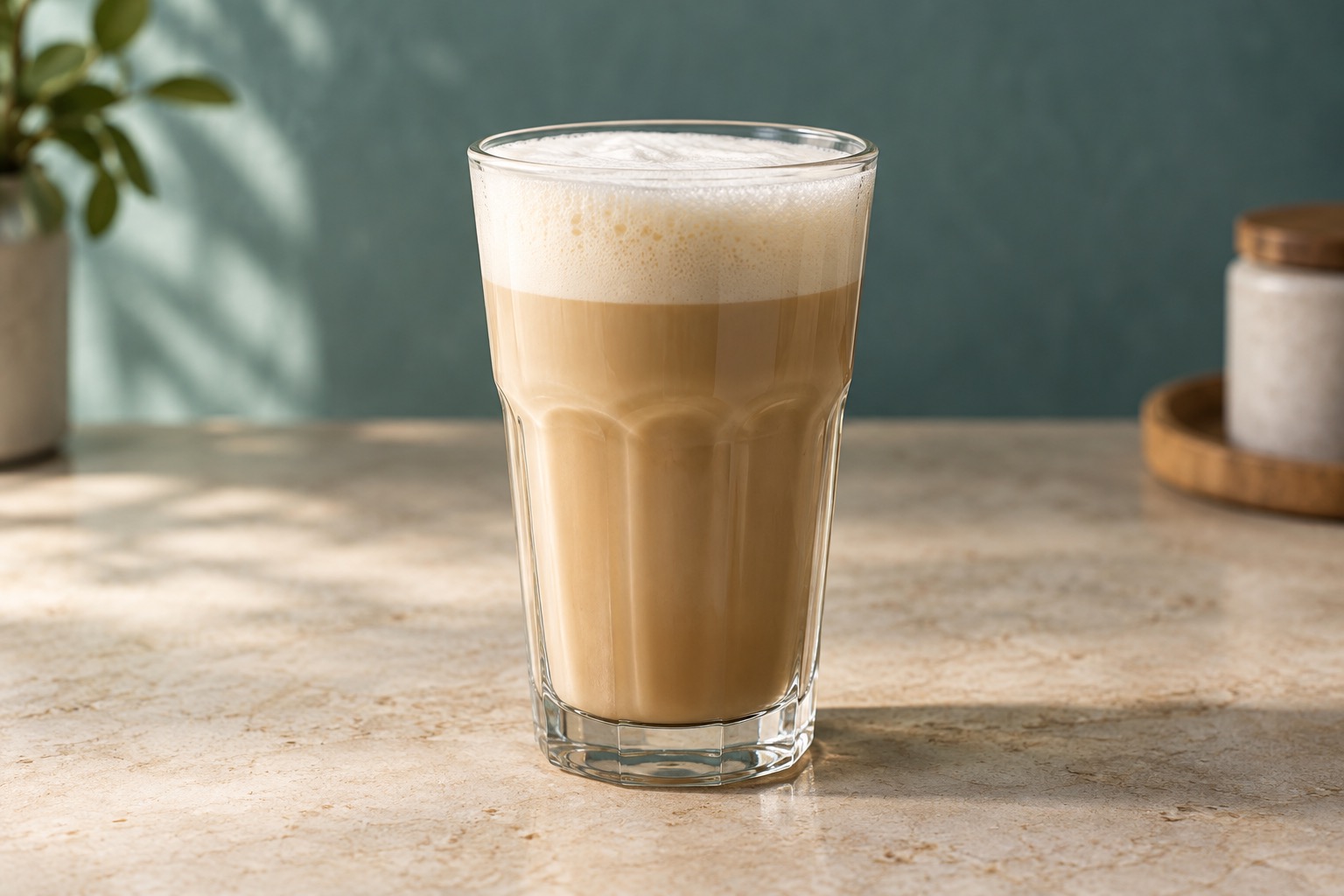
A milky espresso drink with a light layer of foam.
The story behind the cup
Galão is a milky Portuguese coffee commonly served in a tall glass. The generous milk proportion gives it a softer character than a small espresso, making it an approachable companion to a pastry or a leisurely break. It belongs to Portugal’s varied vocabulary of coffee orders. This recipe is a home approximation of the style; café proportions and the exact strength of the coffee can differ.
Hot sweetened coffee with plum spirit and a cream topping.
The story behind the cup
Schümli Pflümli combines coffee, plum spirit and a cream topping. The plum flavour and alcohol distinguish it from an ordinary coffee with cream, while the topping provides a soft contrast to the hot drink beneath. This Swiss recipe belongs to the family of warming coffee cocktails. It is a small indulgence for adults, with sweetness and spirit proportions varying between preparations.
Coffee brewer, kettle, bowl and whisk if making whipped cream, spoon, measuring utensils and 250 ml heatproof glass.
Ingredients
150 ml strong hot coffee
40 ml plum schnapps
8 g sugar
30 ml whipped cream
Cocoa powder, a small pinch
Make your coffee
Prepare 150 ml hot strong coffee using the linked base method. If making the topping from liquid cream, whisk cold whipping cream until it holds soft peaks, then measure 30 ml.
Warm a heatproof glass of at least 250 ml with hot water and empty it. Add sugar, plum schnapps and coffee; stir until dissolved.
Top with whipped cream and the pinch of cocoa. Serve one portion immediately.
Cream volume is a practical home amount. Plum liqueur and plum schnapps differ in sweetness and strength; choose deliberately and adjust to taste.
Recipe reference: gutekueche.ch. Home preparation adapted from the source; methods and preferences vary.
A straightforward Swedish roaster's guide to fresh filter coffee.
The story behind the cup
Bryggkaffe is brewed filter coffee, a familiar cup for fika. Fika is more than the drink: it is a pause to sit together, often with something sweet such as a cinnamon bun. Visit Sweden describes it as an everyday social custom, including at work. A straightforward pot of coffee makes sense in that setting because the conversation and shared break are as important as elaborate preparation.
Coarse coffee steeped directly in a kettle, a Norwegian outdoor coffee practice.
The story behind the cup
Kokekaffe is pot-brewed coffee, well suited to outdoor life and making several cups with simple equipment. Norwegian roaster Friele connects it with campfires and longstanding everyday brewing traditions. Coarse grounds steep in hot water and settle before serving. Its practical appeal is clear: there is no need for an espresso machine or disposable filter, and a pot can be shared while people enjoy their surroundings.
Stovetop coffee kettle or saucepan, stove, scale, spoon, timer and two cups.
Ingredients
30 g coarse-ground coffee
500 ml water
Make your coffee
Bring 500 ml water to a boil in a clean stovetop coffee kettle or saucepan and remove it from the heat. Do not add grounds to an electric water kettle.
Stir in the coffee and steep off heat for 6–8 minutes.
Pour carefully into two cups, leaving sediment and the final splash behind. Finished yield is less than 500 ml because the grounds retain water.
Makes a half-liter batch at 60 g coffee per liter. Steep off the heat rather than continuously boiling the grounds.
Recipe reference: friele.no. Home preparation adapted from the source; methods and preferences vary.
Chilean-style coffee milk served over vanilla ice cream with whipped cream.
The story behind the cup
Chilean café helado is an ice-cream coffee treat. In the version described by Chilean cook Pilar Hernandez, it evokes café outings and a generous combination of coffee, milk, vanilla ice cream and cream. It is more substantial than a plain iced coffee and can serve as dessert. Our recipe follows that style without suggesting that every Chilean café uses exactly the same proportions or toppings.
Espresso machine, heatproof mixing container, refrigerator, bowl, whisk, scoop, spoon and 350–400 ml glass.
Ingredients
30 ml espresso
120 ml cold whole milk
2 g sugar for the coffee milk
60 ml vanilla ice cream
60 ml heavy cream
3 g sugar for the cream
Make your coffee
Prepare 30 ml espresso using the linked base method. Dissolve 2 g sugar in the hot espresso, then stir in the cold milk. Refrigerate until cold, about 20–30 minutes; a cold-water bath around the container speeds cooling.
Whisk cold cream with the remaining 3 g sugar to soft peaks.
Put ice cream in a 350–400 ml glass, pour over chilled coffee milk and top with cream. Serve immediately with a spoon.
One serving, scaled from Pilar Hernández’s four-serving recipe with rounded metric conversions.
Recipe reference: cocinachilena.cl. Home preparation adapted from the source; methods and preferences vary.
Espresso poured over hot water for a longer black coffee.
The story behind the cup
The long black pairs espresso with hot water, usually putting the water in the cup first. This keeps the fresh espresso at the surface and gives it a different presentation from versions of an Americano made in the opposite order. It is familiar in New Zealand’s espresso café vocabulary. The strength depends on the water ratio, so the name describes an approach rather than one compulsory cup size.
Espresso machine, measuring utensils and suitable heatproof cups.
Ingredients
60 ml double espresso
120 ml hot water
Make your coffee
Put the hot water into a cup.
Brew the double espresso directly onto the water.
Stir gently if desired and serve.
A regional 2:1 water-to-espresso example. For course practice, use R05 Long Black. This version uses volumes rather than the course’s beverage-mass specification; ratios vary across Australian and New Zealand cafés.
Recipe reference: breville.com. Home preparation adapted from the source; methods and preferences vary.
Espresso with hot milk and a fine, thin foam finish.
The story behind the cup
The flat white is strongly associated with Australian and New Zealand café culture, and both countries have claims to its beginnings. Its identity lies in espresso combined with finely textured milk, with a relatively thin foam layer rather than a large, airy cap. A compact serving lets the coffee remain noticeable. Latte art can appear on a flat white; the drink is defined by its balance and texture, not by the absence of a pattern.
Espresso machine, milk steamer and pitcher or small pan plus handheld frother, measuring utensils and 160–180 ml cup. Milk thermometer.
Ingredients
40 ml espresso
90 ml milk
Make your coffee
Prepare 40 ml espresso using the linked base method in a 160–180 ml cup.
Texture the milk to a fine, glossy consistency at about 60–65 °C, using the small-portion guidance above. For a pan version, heat until steaming and froth briefly; this produces a different texture from steam-wand microfoam. Measure the 90 ml serving portion.
Swirl the milk, pour it into the espresso and finish with only a thin foam layer. Serve immediately.
A compact regional variation. For course practice, use R08 Flat White. This version measures espresso by volume; the course recipe measures beverage mass. Flat-white culture is shared with New Zealand.
Recipe reference: nespresso.com. Home preparation adapted from the source; methods and preferences vary.
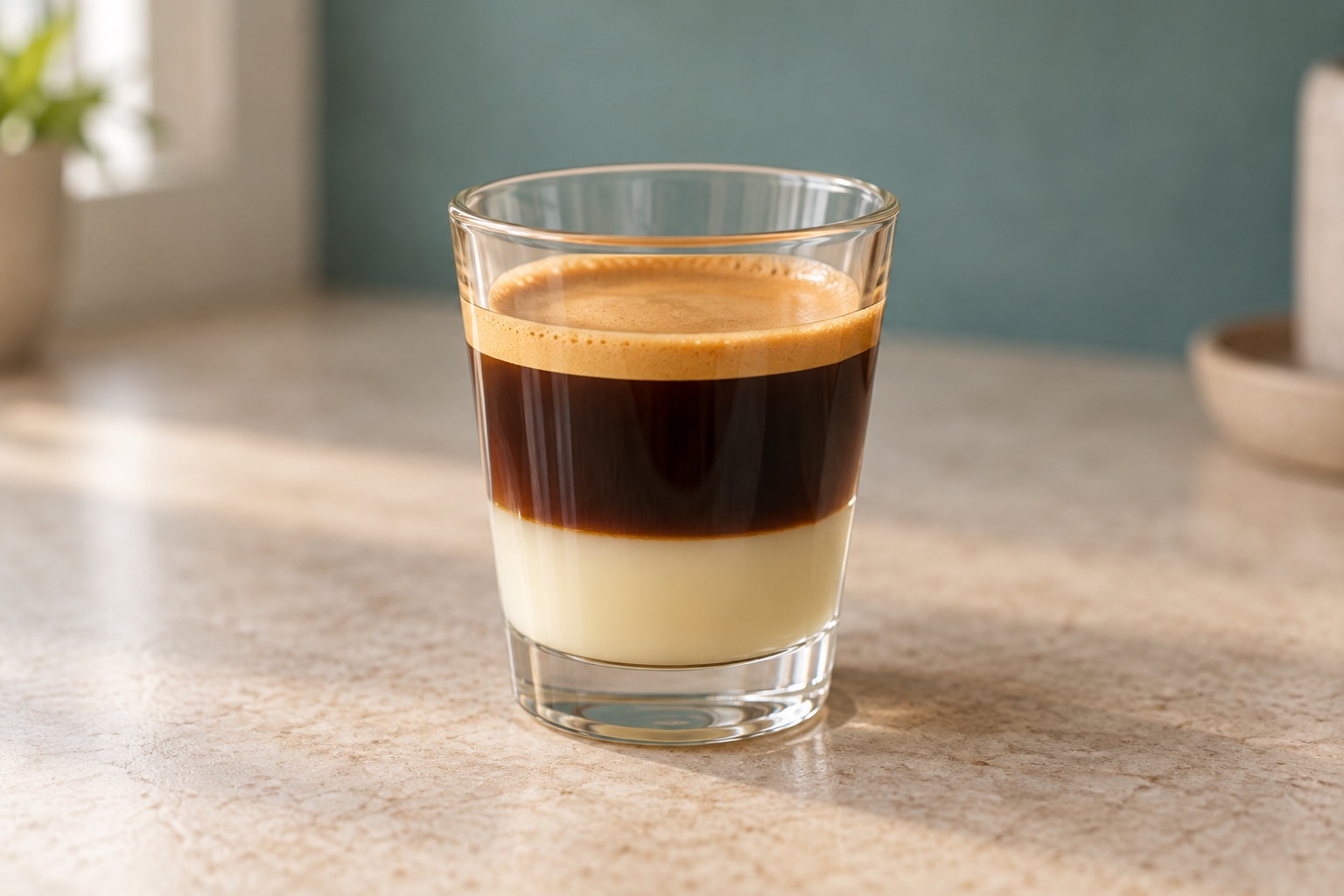
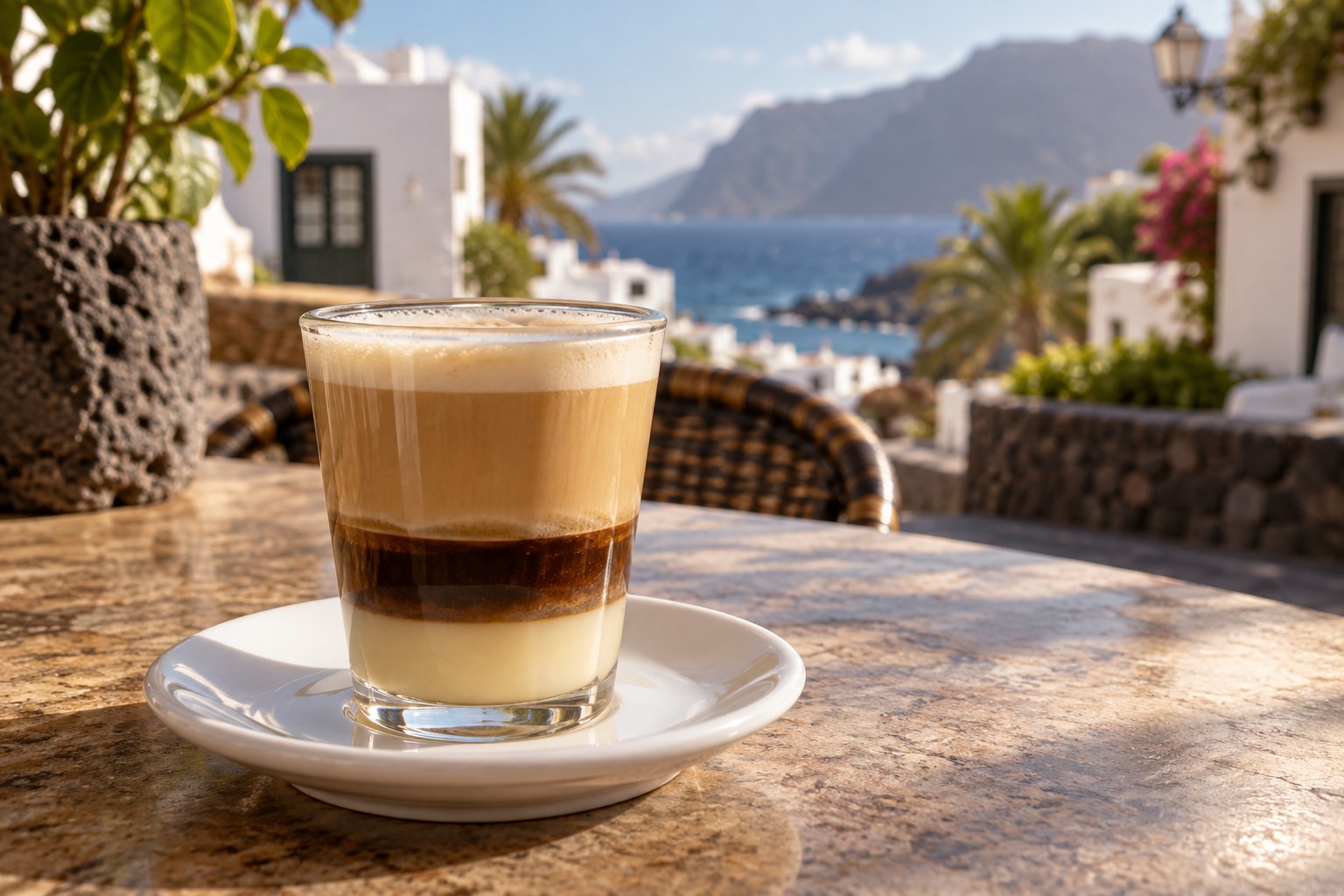
Café bombón layers espresso over sweetened condensed milk. A small clear glass shows off the contrast before the drink is stirred, turning a simple two-ingredient combination into a distinctive café serving. The condensed milk supplies both sweetness and body, so it tastes quite different from coffee with ordinary milk and sugar. This Spanish-style preparation is a sweet, concentrated treat rather than a large milky coffee.
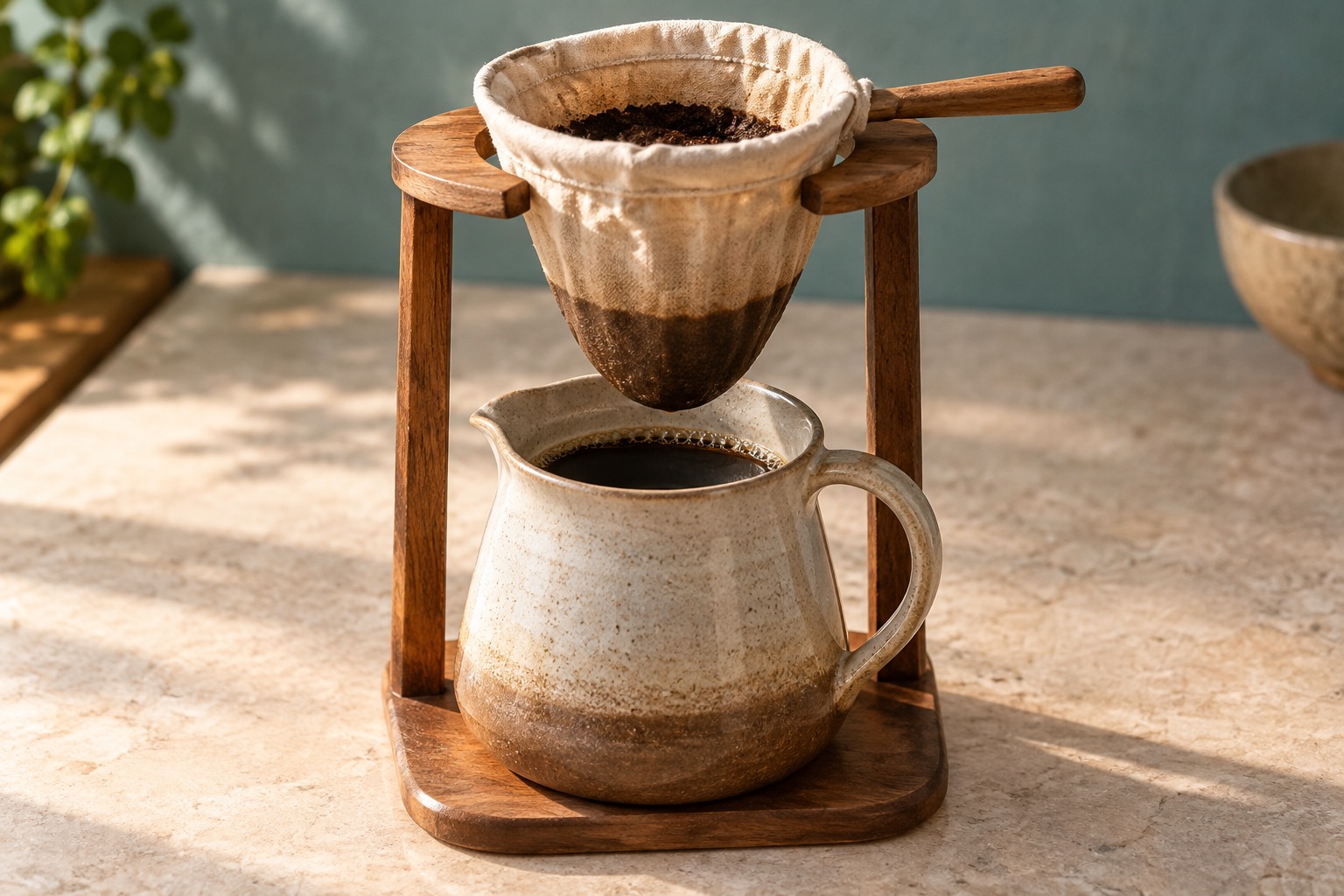
Coffee dripped through a cloth filter held in a chorreador stand.
The story behind the cup
Café chorreado uses a cloth filter held over a cup or pot, often in a wooden stand called a chorreador. Water passes through the coffee by gravity, making it an approachable home brewing method. The reusable filter and visible dripping are part of its character. This Costa Rican preparation shows how a simple kitchen tool can become closely connected with a country’s everyday coffee identity.
Chorreador stand and cloth coffee filter, kettle, heatproof receiving jug, measuring utensils and two cups.
Ingredients
28 g medium-ground Costa Rican coffee
480 ml brewing water
Extra hot water to rinse cloth filter
Make your coffee
Rinse a clean cloth coffee filter with hot water and discard the rinse. Fit it securely in the chorreador over a heatproof jug. Add medium-ground coffee.
Heat the measured 480 ml brew water until just off the boil. Pour a little to wet all the grounds, then continue slowly in small additions so the cloth does not overflow.
Let all the water drain through, remove the filter and divide between two cups. This is a practical home pouring method; drawdown varies with grind and cloth.
Makes two servings. Coffee weight is an approximate tablespoon conversion; adjust to taste. Cloth-filter brewing is also practiced beyond Costa Rica.
Recipe reference: costarica.com. Home preparation adapted from the source; methods and preferences vary.
A blended coffee cocktail with cachaça and condensed milk.
The story behind the cup
Batida is a Brazilian family of mixed drinks, and this coffee version combines coffee with cachaça and creamy sweetness. It adapts that cocktail idea to coffee rather than representing the country’s standard everyday brew. Its blended texture and easy batch preparation suit a social occasion. Because it contains alcohol, it belongs alongside coffee cocktails rather than breakfast coffee, even though familiar coffee flavours lead the drink.
Coffee brewer, ice-capable blender, measuring utensils and 300 ml serving glass.
Ingredients
100 g sweetened condensed milk
60 ml chilled, very strong brewed coffee
60 ml cachaça
1–2 ice cubes
Make your coffee
Prepare 60 ml very strong brewed coffee in advance and chill it completely before blending. This is the measured brewed liquid, not 60 ml of brewing water.
Add the condensed milk, chilled coffee, cachaça and ice to an ice-capable blender.
Blend until the ice is broken down and the drink is smooth. Pour into a 300 ml glass and serve immediately.
One serving, scaled from Aline Shaw’s four-serving coffee batida with rounded metric conversions.
Recipe reference: braziliankitchenabroad.com. Home preparation adapted from the source; methods and preferences vary.
Fine coffee brewed in a džezva, with the foam shared between small cups.
The story behind the cup
Bosanska kafa is closely related to the wider Ottoman-influenced coffee tradition, but Bosnian preparation and service have their own identity. A small pot, fine grounds and a careful foam layer are part of the experience. Sugar may be served separately rather than automatically mixed into the brew. It is a coffee for sitting and talking, with enough time for the grounds to settle and the cup to cool.
Džezva with room for rising foam, small saucepan or kettle, teaspoon, measuring utensils and two small heatproof cups.
Ingredients
7 g very finely ground coffee (about 2 tsp)
140 ml water
Sugar or rahat lokum, optional, to serve
Make your coffee
Boil the water, then pour roughly three quarters onto the grounds in a džezva and stir briefly.
Heat gently until the foam rises; remove from heat before it spills.
Add the remaining hot water, heat until the foam rises again, then remove and rest for 3–4 minutes so the grounds settle.
Divide a little foam between two small cups and pour slowly, leaving most grounds in the pot. Offer the optional sugar or rahat lokum alongside.
Allow one small cup per person. The 70 ml cup and gram quantities are home estimates based on a teaspoon-per-cup method. Related preparations are shared across the Balkans.
Recipe reference: balkanlunchbox.com. Home preparation adapted from the source; methods and preferences vary.
A small unfiltered coffee prepared by adding fine grounds to freshly boiled water.
The story behind the cup
Domaća kafa means domestic or home coffee: a small-pot preparation familiar in Serbian households. It belongs to a regional family of finely ground, unfiltered coffees, with local habits around sweetness and serving. Being invited for coffee can be as much about company as the drink itself. Espresso also has a place in contemporary cafés, so this recipe describes a particular home tradition rather than every Serbian coffee order.
Fine coffee heated in a mbriki until a foamy kaimaki forms.
The story behind the cup
Cyprus coffee is made in a small pot with finely ground coffee and served in a small cup. The foam and the settled grounds distinguish it from filtered coffee. Sweetness is part of the order and preparation rather than something necessarily added afterwards. It shares features with neighbouring coffee traditions while remaining a familiar local drink; a slow sip and a little patience suit it better than hurried drinking.
Fresh filter coffee using Finnish roaster Meira's measured brew guidance.
The story behind the cup
Suodatinkahvi is filter coffee, the style Visit Finland describes as the country’s most popular way to prepare coffee. The social setting matters too: a kahvitauko is a coffee break, and offering coffee is a familiar gesture of hospitality. The method produces a straightforward pot that is easy to share. Its cultural interest is in that everyday rhythm, not in an elaborate garnish or a spectacular presentation.
Drip coffee brewer and filter, measuring utensils and suitable heatproof cups.
Ingredients
18–21 g filter-ground coffee
300 ml fresh water
Make your coffee
Fit the correct paper filter into a clean drip brewer.
Put the grounds in the filter basket and the 300 ml fresh water in the brewer’s reservoir.
Start the brewer according to its instructions; use its normal filter-coffee cycle. If adjustable, aim for 92–96°C brewing water. Wait until dripping finishes and serve the batch freshly made.
A 300 ml batch based on Meira’s 60–70 g per liter recommendation. This is a Finnish roaster’s everyday approach to an international brewing method.
Recipe reference: meira.fi. Home preparation adapted from the source; methods and preferences vary.
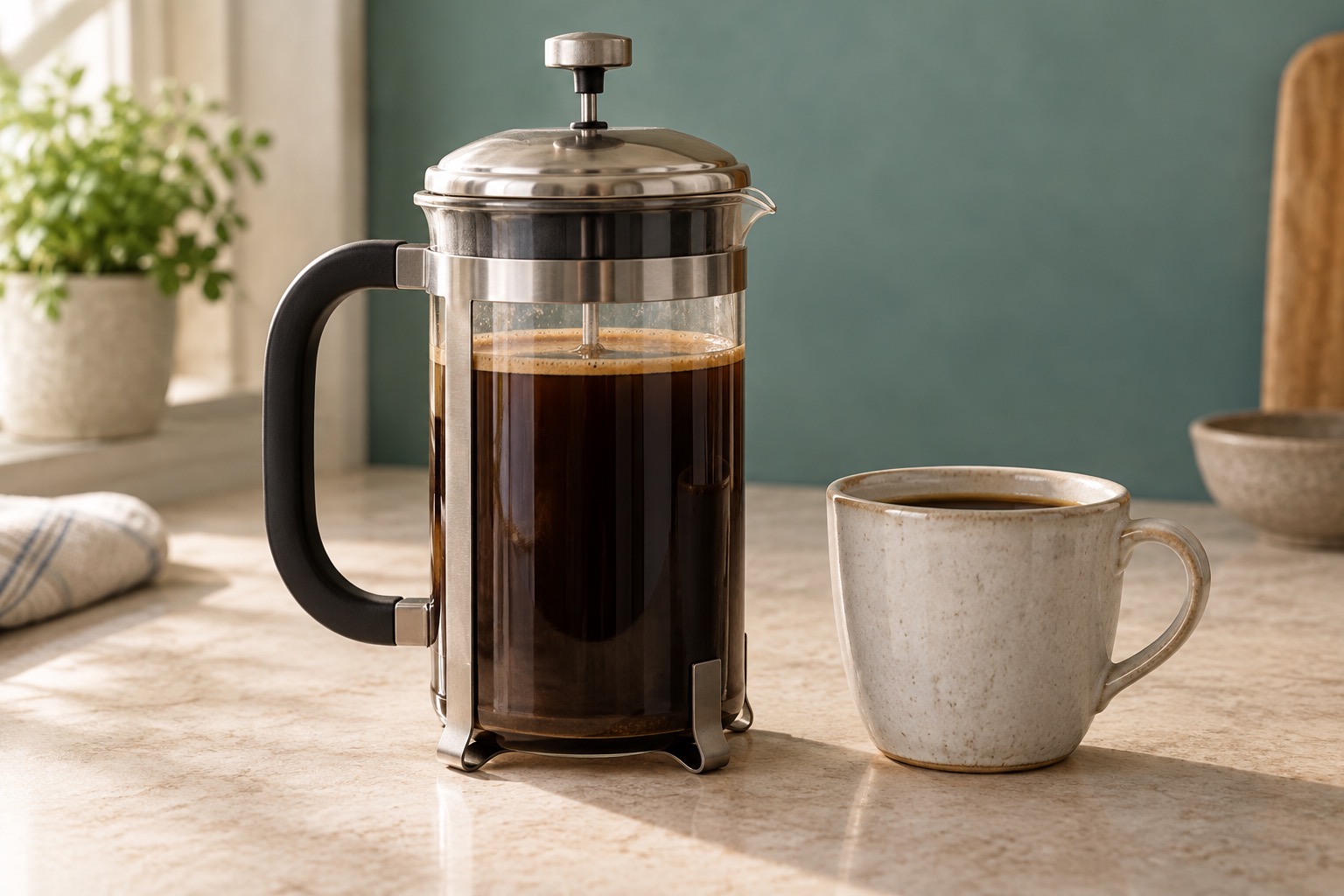
A Danish roaster's patient French-press method, with time for the grounds to settle.
The story behind the cup
Stempelkandekaffe is coffee made in a press pot. The Danish name identifies the equipment rather than a uniquely Danish invention. A shared pot fits comfortably with the idea of hygge: an inviting atmosphere and time with other people. Here, the interest is in an uncomplicated brewing ritual that suits the table. The press retains more of the coffee’s oils and fine particles than a paper filter.
Brewed black coffee softened with a generous amount of warm milk.
The story behind the cup
Koffie verkeerd combines coffee with a generous amount of hot milk. The milk-led balance gives it a mellow character, distinct from a short black coffee. It is part of the Netherlands’ café vocabulary, but the name does not require every café or home to use identical proportions. Our version follows a Dutch recipe source and is intended as a comfortable, approachable cup rather than a competition espresso specification.
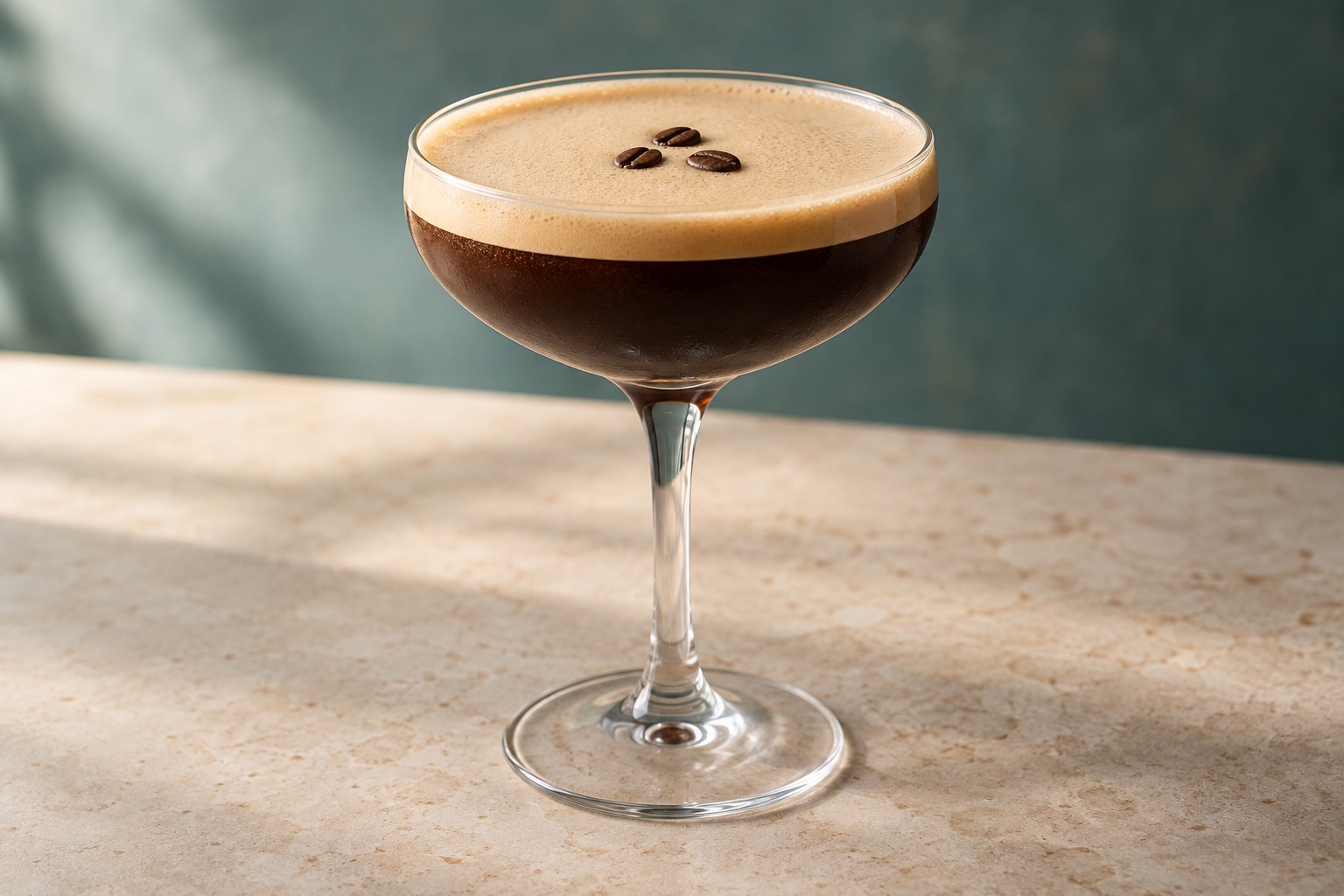
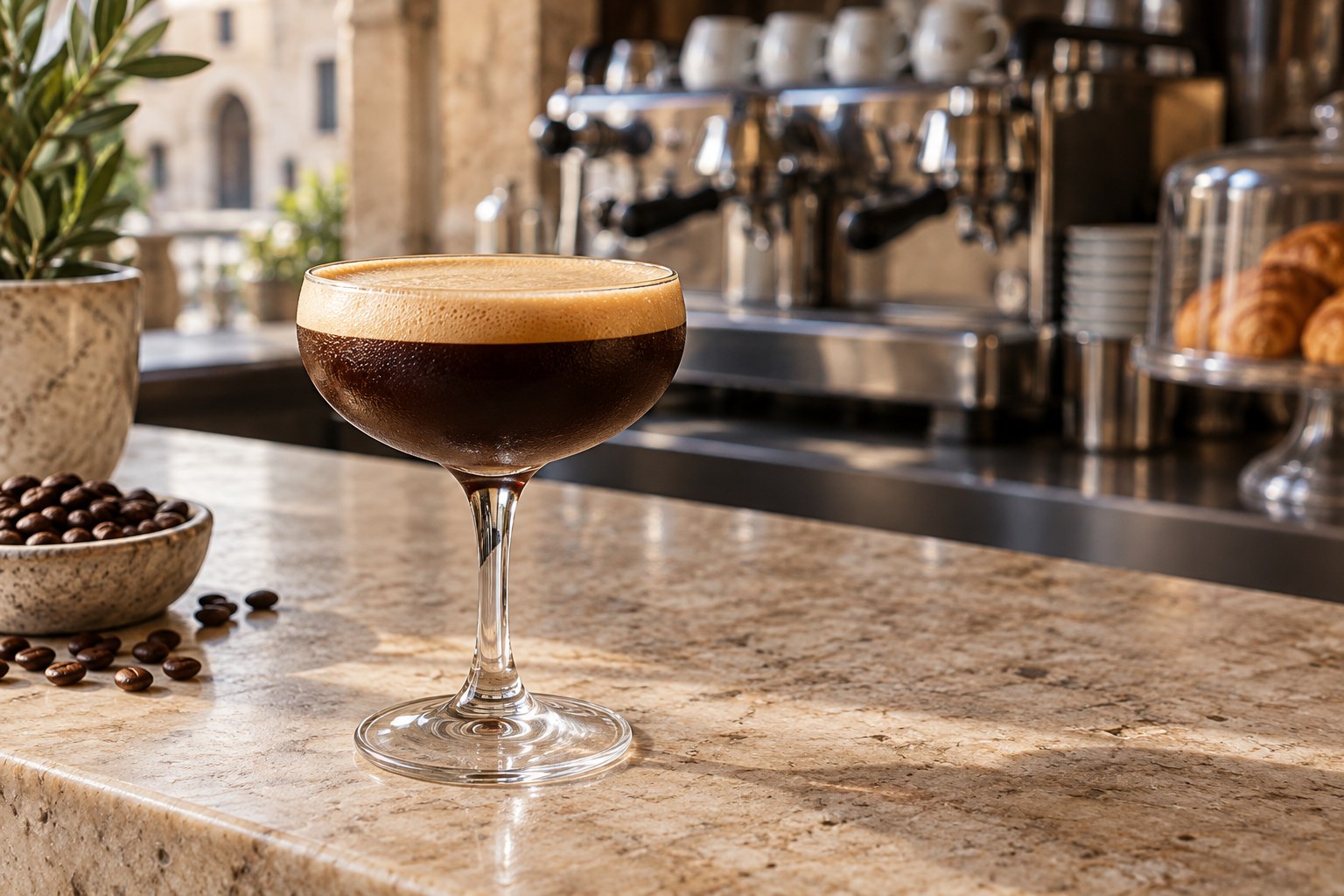
A London-associated coffee cocktail shaken with vodka and coffee liqueurs.
The story behind the cup
The Espresso Martini is associated with London bartender Dick Bradsell and the city’s cocktail scene in the 1980s. Coffee, vodka and coffee liqueur made it a bridge between an after-dinner coffee and a cocktail. Shaking creates the characteristic foam; it is not a milk topping. Despite the name, it is a different drink from the classic gin-and-vermouth Martini, and it contains both alcohol and caffeine.
Hot coffee sweetened with maple syrup and enriched with a spirit, milk and cream.
The story behind the cup
This maple coffee is a contemporary recipe from a Canadian maple producer organisation. Maple syrup brings its own flavour as well as sweetness, linking the drink to an ingredient particularly associated with Quebec and Canadian maple production. It is an example of a regional ingredient inspiring a modern coffee recipe. We do not present it as an old national ritual or a drink made the same way throughout Canada.
Coffee brewer, small saucepan, measuring utensils, spoon and heatproof mug of at least 400 ml; whisk and bowl if whipping cream from scratch.
Ingredients
250 ml hot brewed coffee
30 ml whisky, cognac or brandy
15 ml maple syrup
30 ml hot milk
30 ml whipped cream
Maple sugar, a small pinch
Make your coffee
Prepare and measure 250 ml hot brewed coffee. Warm 30 ml milk gently in a small pan until steaming. Have 30 ml whipped cream ready.
Pour the coffee into a heatproof mug of at least 400 ml. Stir in the spirit, maple syrup and warm milk.
Top with the whipped cream and pinch of maple sugar; serve immediately.
A Quebec maple producer’s recipe. Coffee, spirit and syrup follow the listed metric quantities; milk and cream are suggested amounts to adjust to taste.
Recipe reference: maplefromcanada.ca. Home preparation adapted from the source; methods and preferences vary.
Tinto is a familiar name for black coffee in Colombia. This tinto campesino recipe adds panela and cinnamon for a sweet, aromatic home variation. Our source uses instant coffee, making it a practical adaptation rather than a claim about how every traditional pot is brewed. Panela’s cane-sugar flavour is part of the drink’s identity; the recipe offers one approachable interpretation of a wider coffee tradition.
A home adaptation for a Peruvian gravity-filter coffee pot. Hot water passes through the grounds into the lower serving vessel.
The story behind the cup
Café gota a gota makes a concentrated coffee essence slowly, drop by drop, which can then be diluted to taste. A Peruvian coffee retailer describes it as a longstanding local brewing tradition. The separation between making the essence and preparing the cup is its distinctive feature. It offers a different way to think about strength: the concentrated brew is a starting point, not necessarily the final drink.
Peruvian gota-a-gota brewer with upper rain filter and lower server of at least 600 ml, kettle, scale and two mugs.
Ingredients
50 g coarse-ground coffee
600 ml hot water
Make your coffee
Rinse and warm the brewer with hot water, then empty it.
Add the coffee without packing it tightly. Use a little of the 600 ml hot water to wet the grounds and wait about 30 seconds.
Fit the upper rain filter and pour the remaining measured water into its center in stages, letting the level fall between additions so it does not overflow.
Let the coffee drain, remove the upper section and serve.
Makes two mugs. The 50 g coffee and 600 ml water are suggested home amounts, not a measured recipe from the equipment overview. This drink-ready version differs from concentrated essence diluted later.
Coffee with an equal portion of milk, matching the local término medio order.
The story behind the cup
Puerto Rican coffee orders express how much milk and coffee you want in the cup. The local tourism guide describes término medio as a useful middle-ground order when choosing café con leche. That vocabulary turns a simple milk-and-coffee combination into a personal preference. This recipe provides a starting balance, while recognising that a café’s interpretation and an individual drinker’s taste may differ.
Warm foamed milk marked with a small espresso shot.
The story behind the cup
A lágrima is a milk-led coffee with only a small addition of coffee—the name evokes a tear. It is useful for understanding that café orders are not always about making coffee stronger: sometimes the milk is deliberately the main event. This Argentine-associated preparation offers a gentle alternative to espresso-heavy drinks. Our home recipe illustrates the idea rather than claiming one precise ratio used in every café.
Espresso machine, steam wand and pitcher or small saucepan and whisk, thermometer, measuring utensils and heatproof cup of at least 300 ml.
Ingredients
20 ml espresso
200 ml whole milk
Make your coffee
Prepare and measure 20 ml espresso.
Steam the milk to about 60–65°C with a thin layer of foam. For the listed home pan alternative, heat gently until steaming, then whisk briefly to make light foam.
Pour the milk into a cup of at least 300 ml, add the espresso and serve.
A milk-dominant Argentine café order. This home version uses Chef Chad’s proportions; cafés may serve different ratios.
Recipe reference: foodthinkers.com.ph. Home preparation adapted from the source; methods and preferences vary.
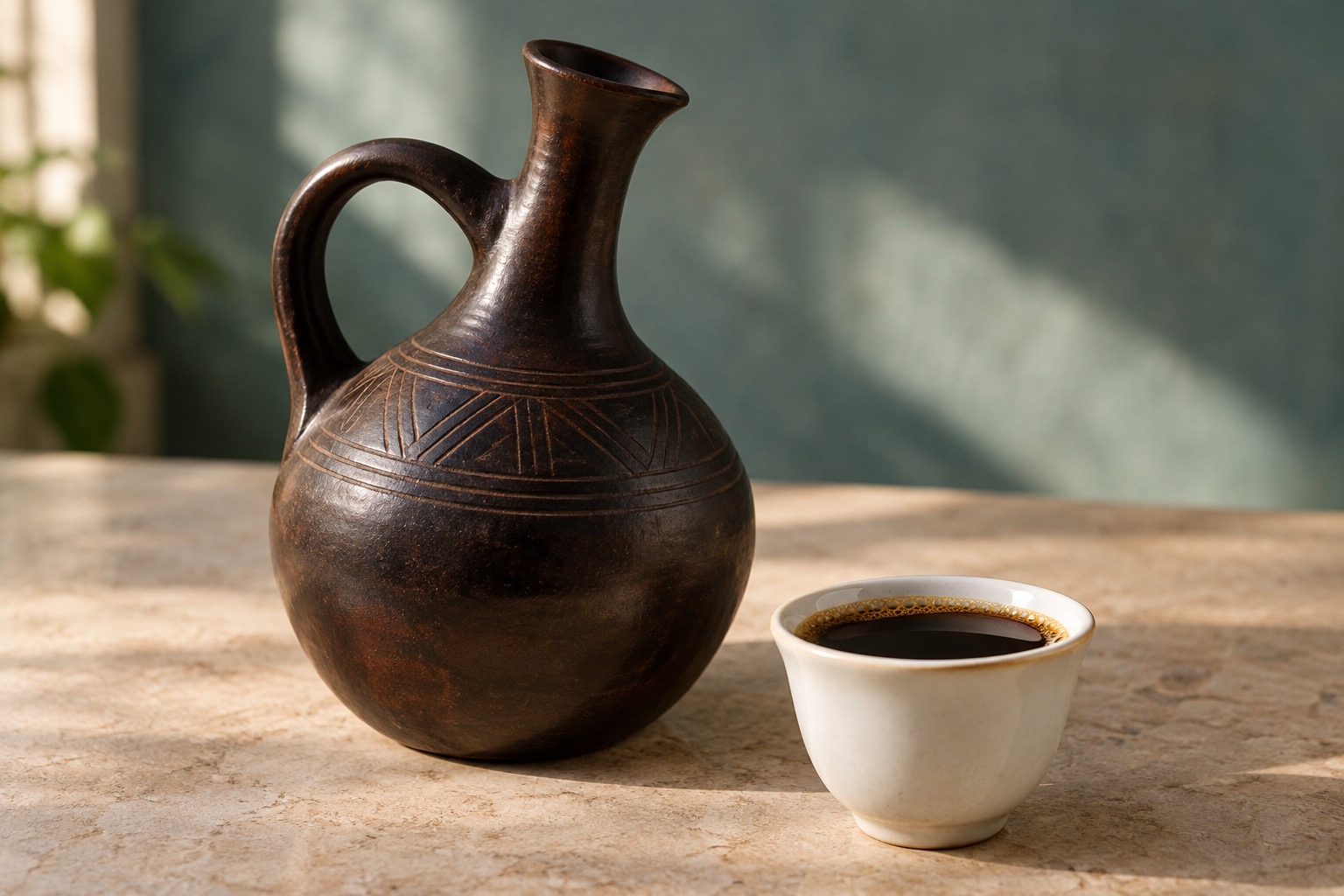
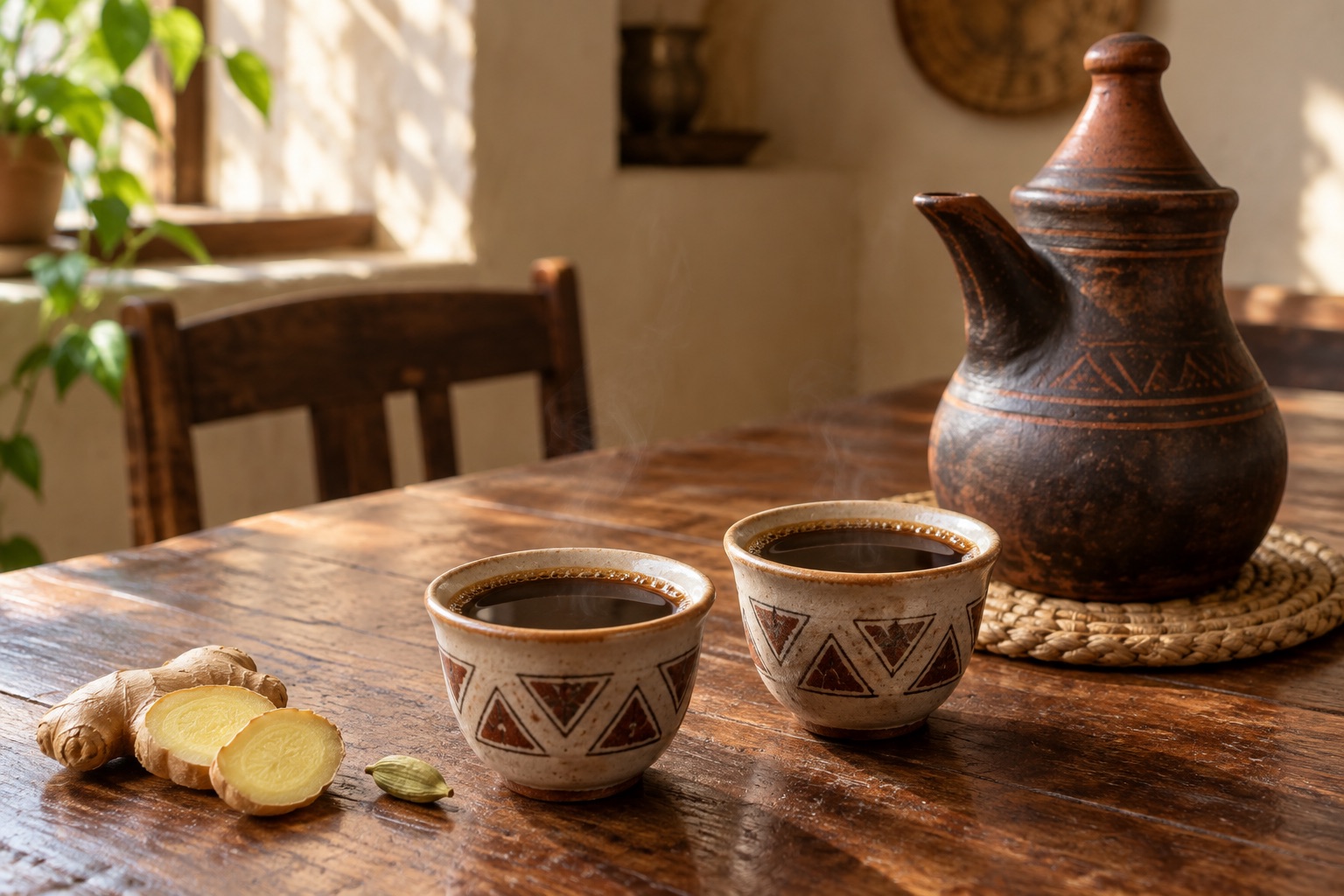
Coffee brewed in a jebena and poured gently after the grounds settle.
The story behind the cup
A jebena is a clay coffee pot associated with Ethiopian coffee preparation and social hospitality. Brewing and serving can be part of a much fuller occasion, with time given to guests and conversation. The small cups encourage sharing a pot rather than carrying away a large individual drink. Our kitchen recipe covers a simplified preparation; it does not reproduce every stage or custom of a complete coffee ceremony.
Filtered coffee scented with grains of Selim, associated with Touba and Senegal’s Mouride community.
The story behind the cup
Café Touba is named for Touba and is associated with Senegal’s Mouride tradition. Its distinctive spice is diar, or grains of Selim, from Xylopia aethiopica; this is not ordinary black pepper. The combination gives the coffee an aromatic, peppery character. The FAO’s Senegal food publication documents the drink, showing how coffee can carry a particular local identity through both its ingredients and its social associations.
A Somali recipe creator’s milk-based coffee with cardamom and cinnamon.
The story behind the cup
This Somali qahwe recipe combines coffee and milk with cardamom and cinnamon. The source, My Somali Food, presents a home preparation that pairs fragrant spice with a comforting milk-based cup. It is one family-style approach rather than a rule for all Somali coffee. Its character comes from the balance of the aromatics and coffee, demonstrating how small pantry additions can change a familiar drink.
Saucepan of at least 1 liter, mortar and pestle, spoon, fine cloth coffee filter with support, measuring utensils and two heatproof cups.
Ingredients
Approximately 480 ml milk
2 tablespoons freshly ground coffee
2 tablespoons sugar
7 cardamom seeds, crushed
2 cinnamon sticks, crushed
Make your coffee
Warm the milk in a saucepan over medium heat, watching closely. As it reaches a boil, immediately lower the heat.
Add the crushed spices and ground coffee; steep over low heat for 3–4 minutes.
Stir in the sugar until dissolved. Strain slowly through a securely supported fine cloth coffee filter into two cups; leave the settled grounds behind and do not squeeze the filter.
A milk variation of Somali qahwe; other preparations omit milk. Sweeten to taste and strain before serving.
Recipe reference: mysomalifood.com. Home preparation adapted from the source; methods and preferences vary.
A moderately sweet Egyptian coffee slowly heated in a kanaka and served with its foam.
The story behind the cup
Ahwa mazboot describes an Egyptian coffee order with a medium level of sweetness. Fine coffee is brewed in a small pot and served with its grounds, placing it within a wider regional family of unfiltered coffees. The sweetness is part of making the drink. Understanding the order helps explain the culture: the same basic method can produce different cups according to the customer’s preference.
Kanaka, measuring utensils and suitable heatproof cups.
Ingredients
10 g powder-fine coffee
70 ml cold water (one small serving cup)
1 teaspoon sugar
1 cardamom pod, optional
Make your coffee
Combine coffee, water and sugar in a kanaka before heating. If using cardamom, crack the pod and add it now.
Warm over the lowest flame without stirring further.
As the foam rises, lift the pot from the heat. Spoon foam into the cup, pour the coffee gently and rest one minute. Remove the cardamom pod before serving.
Use a small serving cup to measure the water. The 70 ml quantity is a home starting point; cup sizes vary. Related stovetop methods are shared across the region.
Recipe reference: seelaz.com. Home preparation adapted from the source; methods and preferences vary.
A South African family’s coffee brewed with grounds held in a muslin bag inside a pot.
The story behind the cup
This cloth-bag version of moerkoffie comes from a South African account of home coffee memories. A reusable fabric bag and a pot provide a practical way to prepare coffee without a modern machine. It is a particular household-style method within a broader set of moerkoffie preparations. The appeal is its directness and its connection with remembered kitchen routines, rather than an exact recipe followed by everyone.
Stovetop-safe 1-liter coffee pot, food-safe muslin coffee bag and support, kettle, measuring utensils and cups.
Ingredients
Approximately 60 g ground roasted coffee
Boiling water to the safe working level of a 1-liter coffee pot, leaving generous headroom (not 1 liter of added water)
Sugar or cream to taste, optional
Make your coffee
Put the grounds in a clean food-safe muslin coffee bag and suspend it inside a stovetop-safe 1-liter coffee pot, keeping the bag away from exposed flame.
Add boiling water only to the pot’s safe working level, leaving generous headroom for foam; the pot capacity is not a 1-liter water addition. Bring just back to a boil while watching closely.
Lower the heat immediately and simmer for two minutes. Remove from the heat and lift out the bag, allowing it to drain without squeezing.
Pour into small cups and add the optional sugar or cream to taste.
A Highveld family method shared by Jake Uys. Use a 1-liter pot and the stated coffee weight; the pot capacity is not a measured 1-liter water addition.
Recipe reference: yumeatcafe.wordpress.com. Home preparation adapted from the source; methods and preferences vary.
An unsweetened spiced coffee, presented here using Bunaa’s Kenyan preparation.
The story behind the cup
Kahawa chungu is a spiced black-coffee preparation. In this version, cardamom and cinnamon give the pot an aromatic character without relying on milk. It illustrates a different side of coffee from discussions focused only on Kenyan beans and export grades: how a drink is prepared and enjoyed locally also matters. This is a specific regional-style recipe, not a claim that it is the usual coffee throughout Kenya.
Small saucepan, fine cloth coffee filter or fine coffee strainer, measuring utensils and small heatproof cups.
Ingredients
3 teaspoons freshly ground coffee
240 ml cold water
3 cardamom pods
1 cinnamon stick
Make your coffee
Combine the coffee, water and spices in a small pot and bring to a boil.
Lower the heat to a very gentle simmer for 10–15 minutes. Watch the level and reduce the heat further if water is evaporating rapidly; do not let the pot boil dry.
Strain into small cups and serve hot, with dates or pastries if desired.
A coastal Kenyan spiced coffee. The 240 ml cup is a home starting point; household spice preferences and cup sizes vary.
Recipe reference: bunaa.de. Home preparation adapted from the source; methods and preferences vary.
Coffee, sweetener and a little water are beaten into a pale foam, then combined with hot milk.
The story behind the cup
Phitti hui coffee is made by beating instant coffee with sugar and a little water before adding milk. The Pakistani recipe author recalls it from family life well before the recent international attention given to whipped coffee. The beating step creates a creamy-looking texture without requiring an espresso machine. It belongs to an established South Asian home-coffee practice, so its resemblance to dalgona should not erase that earlier context.
Handheld frother, small saucepan, spoon, measuring utensils and heatproof mug of at least 300 ml.
Ingredients
1 teaspoon instant coffee
2 teaspoons maple syrup or sugar
1 teaspoon warm water
Approximately 240 ml whole milk
Make your coffee
Warm the milk gently in a small saucepan until steaming but not boiling.
Put the instant coffee, sweetener and warm water in a mug with enough room for frothing.
Beat with a handheld frother for approximately 30–60 seconds, until pale and creamy.
Pour in the hot milk and stir to combine; serve immediately.
A beaten-coffee preparation recalled from Zeeshan Shah’s childhood. Maple syrup is used in this version; sugar is an alternative. Related methods are shared across South Asia.
Recipe reference: eatdrinkpure.com. Home preparation adapted from the source; methods and preferences vary.
A Philippine coffee supplier’s straightforward immersion method for barako coffee.
The story behind the cup
This kapeng barako recipe follows a Philippine coffee producer’s home brewing guidance. It uses an immersion approach to bring out a bold cup, with careful separation from the grounds before drinking. Barako is a coffee identity, not the name of an espresso-and-milk recipe. Our version focuses on one practical way to brew it; equipment choices and household habits vary, so the method is not the only way to enjoy this coffee.
Sweetened cold coffee topped with lightly salted cream, in a Taiwanese bakery-inspired home version.
The story behind the cup
Taiwanese-style sea salt coffee pairs coffee with a lightly salted cream topping. The appeal is the change between the dark drink and the rich, sweet-savoury cream. It belongs to contemporary café-style coffee rather than an old ceremonial preparation. This home adaptation captures that contrast without claiming to reproduce a particular shop’s proprietary recipe. Stirring or sipping through the cream creates noticeably different experiences.
A concentrated cloth-filter coffee mixed with evaporated and condensed milk.
The story behind the cup
Ipoh white coffee is associated with the old-town coffee-shop culture of Ipoh. “White” does not mean the beans are naturally white: it refers to a distinctive roasting and preparation tradition, followed by a sweet, milky serving. The drink’s identity lies in that combination, not simply in adding milk to any coffee. Our home recipe approximates the style, while a specialist Ipoh blend brings its own characteristic flavour.
Cloth coffee sock with support, heatproof brewing jug and cover, kettle, small saucepan for reheating, spoon, timer, measuring utensils and two cups.
Ingredients
70 g coarse Ipoh white coffee powder, plain grounds rather than instant premix
270 ml boiling water
190 ml evaporated milk
35 g sweetened condensed milk
Make your coffee
Place the grounds in a cloth coffee sock supported inside a heatproof jug so they remain immersed in the water. Add the 270 ml boiling water, cover the jug and steep for 15 minutes.
Lift the sock and let the coffee drain. Gently rewarm the brew for hot service without boiling it again.
Stir in both milks until evenly blended and divide into two heatproof cups. Stirring is the simple home alternative to pouring between vessels.
Makes two hot servings. These milk quantities are for the hot version; an iced preparation may need a different balance.
Recipe reference: jackiem.com.au. Home preparation adapted from the source; methods and preferences vary.
A cloth-filter preparation adapted from Clara Gonzalez’s Dominican home-coffee guide.
The story behind the cup
Café de colador uses a cloth strainer and is connected with Dominican home and countryside coffee traditions. Dominican Cooking contrasts this familiar older method with the greca, or stovetop coffee pot, also common in modern homes. The reusable cloth makes the brewing simple and visible. It is a reminder that the equipment someone remembers from a family kitchen can be as meaningful as a formal national recipe.
A Japanese café-style serving of iced coffee and vanilla ice cream, following UCC’s recipe.
The story behind the cup
A coffee float turns cold coffee into a small dessert by adding ice cream. This version follows a recipe from Japanese coffee company UCC, illustrating a playful café-style use of coffee. As the ice cream melts, the drink becomes sweeter and creamier. It is a Japanese recipe interpretation of a wider float idea, not a claim that ice cream and coffee were first combined in Japan.
A contemporary café drink associated with Moscow: espresso, cream and sugars are foamed together.
The story behind the cup
Vanilla Raf is associated with Moscow’s Coffee Bean café in the 1990s and a customer named Rafael, according to coffee accounts such as Torrefacto’s. Its distinguishing step is steaming coffee, cream and sugar together, rather than pouring separately textured milk over espresso. That produces a sweet, integrated, creamy drink. The vanilla version belongs to this modern café tradition, with proportions that can vary between shops.
An origin-specific brewing guide from Fellow for Touchy Coffee’s Uganda Sylvia Achebet coffee, rather than a national mixed drink.
The story behind the cup
This is a contemporary pour-over recipe for a specific Ugandan coffee, not a traditional national drink. Fellow published it for Touchy Coffee’s Sylvia Achebet coffee, so the producer and the particular lot are central to its identity. It shows another way to explore a country through coffee: tasting a named producer’s work. Different beans may need adjustments; the recipe is a starting point for that coffee rather than a rule for Uganda.
A Venezuelan filtered black coffee, prepared here with a cloth filter and a measured single-cup ratio.
The story behind the cup
Guayoyo is a Venezuelan-style black coffee, often appreciated as a lighter, more leisurely cup than a concentrated espresso. The Venezuelan source describes home coffee memories and a simple preparation, giving the drink a connection with everyday family life. Its identity is not built around milk or an elaborate topping. This recipe offers a home starting point, with strength adjusted to the coffee and the drinker’s preference.
Cloth coffee filter and support, kettle, scale and heatproof serving jug.
Ingredients
16 g medium-ground coffee
300 ml water at 90–95°C (194–203°F)
Sugar to taste, optional
Make your coffee
Support a clean cloth coffee filter over a heatproof serving jug, then add the ground coffee.
Wet the grounds with a small amount of the measured water. Continue pouring gradually, allowing the water to filter through without overflowing.
Let the final water drain and serve the coffee. Add sugar if desired.
One serving at 19th Coffee’s suggested 16 g to 300 ml ratio. This pour-through version differs from household preparations that steep grounds in a saucepan.
A cloth-filter brew poured over condensed milk is part of everyday coffee culture in Laos. This single-cup home version can be served hot or over ice.
The story behind the cup
This condensed-milk coffee follows the Lao Coffee Association’s coffee notebook. Strong coffee and sweetened milk form a practical, approachable combination, with sweetness and body built into one ingredient. It is one of the ways the notebook introduces drinking and preparing Lao coffee. The recipe should be understood as a published local preparation, not a claim that every household or café in Laos serves the same cup.
Cloth coffee filter and support, kettle, jug and cup.
Ingredients
18 g medium-fine ground coffee
150 ml hot water
25 g sweetened condensed milk
Ice, optional
Make your coffee
Rinse a clean cloth coffee filter and support it securely over a heatproof jug. Add the grounds.
Pour the hot water slowly through the grounds, keeping the water below the rim. Let it drain.
Spoon the condensed milk into a cup, pour the coffee over it and stir. For an iced drink, let the coffee cool slightly before pouring into an ice-filled heat-resistant glass.
One serving. Suggested home quantities; the source documents the preparation rather than this exact ratio. Contains milk.
Sudanese jabana is associated with roasting, spices and a ceramic coffee pot. This stovetop interpretation uses already-roasted beans and a saucepan for an accessible home preparation.
The story behind the cup
Sudanese jabana takes its name from the distinctive coffee pot used in its preparation. Sudan’s intangible cultural heritage inventory describes the drink as a widespread social tradition, with particularly strong associations in the east of the country. Spices such as ginger may be added according to local preference. The pot and the occasion matter together: this is a way of sharing coffee and company, with variations between communities.
Small saucepan, fine cloth coffee filter and two small heatproof cups.
Ingredients
250 ml water
15 g finely ground roasted coffee
2 thin slices fresh ginger
1 cardamom pod, lightly crushed
Sugar to taste, optional
Make your coffee
Bring the water, ginger and cardamom to a gentle simmer in a small saucepan. Simmer for 3 minutes.
Reduce the heat, stir in the coffee and simmer gently for 2 minutes, watching closely to prevent boiling over.
Remove from the heat and let the grounds settle for 2 minutes. Strain through a fine cloth coffee filter into two small heatproof cups. Sweeten if desired.
Two small servings. Our suggested quantities and saucepan method are a home interpretation, not a fixed national formula. Spice reference: Additional reference
Acehnese sanger uses a modest amount of condensed milk and is traditionally poured between vessels to create a fine foam. Here, gentle whisking makes a practical home alternative.
The story behind the cup
Kopi sanger is associated with Aceh, and Banda Aceh’s tourism office presents it as a local coffee specialty. Coffee and condensed milk are mixed into a smooth, sweet drink, with the coffee remaining an important part of the flavour. It belongs to the region’s sociable coffee-shop setting. Stories about the name circulate, but the clearest connection is the drink’s place in Acehnese café culture rather than a single proven naming tale.
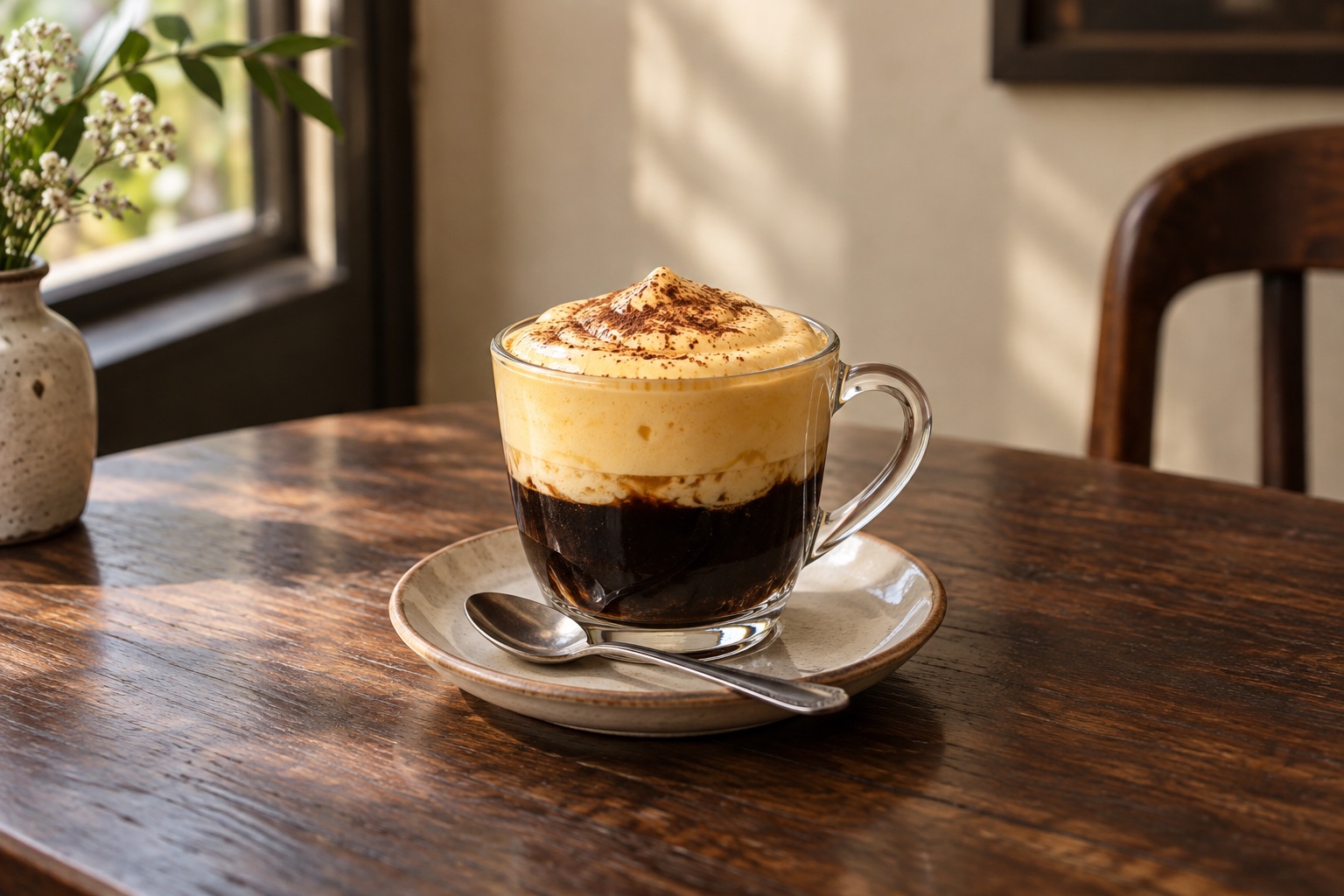
Hanoi’s egg coffee pairs a concentrated brew with a whipped yolk topping. This home version uses pasteurized yolks.
The story behind the cup
Cà phê trứng is especially associated with Hanoi. Its whipped egg-and-condensed-milk topping gives strong coffee a rich, dessert-like contrast, making it quite different from ordinary coffee with milk. Vietnam’s tourism guide identifies egg coffee as one of the country’s distinctive local specialties. Our recipe is a home adaptation; follow its food-safety guidance rather than assuming that warm coffee alone makes an egg topping safe.
Coffee brewer, bowl, electric whisk and heatproof cup.
Ingredients
120 ml strong brewed coffee
2 pasteurized egg yolks
45 ml sweetened condensed milk
1 teaspoon sugar
Cocoa powder, optional
Make your coffee
Have the pasteurized yolks, condensed milk and sugar measured and ready. Prepare 120 ml strong coffee using the site’s strong-coffee base or a phin, and keep it hot while making the topping.
With an electric whisk, beat the pasteurized yolks, condensed milk and sugar for about 5 minutes, until thick and foamy.
Pour the hot coffee into a heatproof cup. Spoon the egg cream on top and optionally dust with cocoa. Serve immediately.
One generous serving. Contains egg and milk. Use pasteurized yolks suitable for uncooked preparations; hot coffee does not reliably cook the topping. Egg safety: Additional reference Keep pasteurized yolks chilled until use.
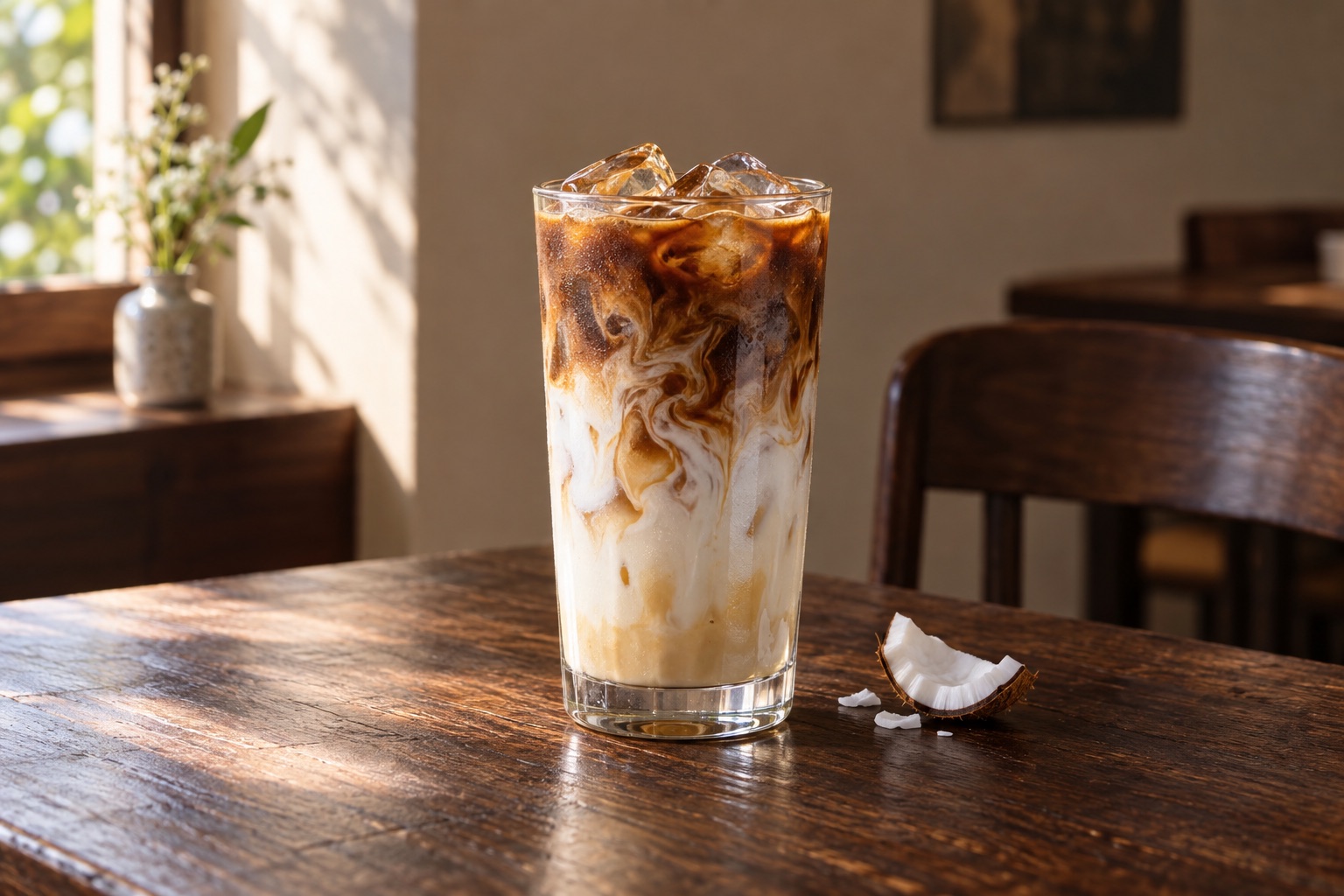
This iced version combines coconut milk and dairy with strong coffee. It follows a Vietnamese coffee roaster’s home recipe rather than the blended frozen style.
The story behind the cup
Vietnamese coconut coffee is a contemporary café-style combination of strong coffee and a sweet coconut mixture. It reflects the inventive side of Vietnam’s coffee culture, where familiar coffee preparations meet new textures and ingredients. Coconut supplies both flavour and a rich mouthfeel, while ice makes the drink refreshing. This is a home interpretation of the style, not an ancient national recipe or an exact copy of a café’s formula.
Prepare and measure 60 ml strong coffee or espresso using the site’s brewing guidance. Stir the canned coconut milk until the cream and liquid are evenly mixed.
Combine the coconut milk, milk and condensed milk in a heat-resistant glass of at least 350 ml.
Add ice, pour the coffee over the milk mixture and stir before drinking.
One serving. Metric quantities rounded from the source. Contains milk and coconut.
A refreshing lemon-and-coffee drink for the Portuguese stop on our tour. This nonalcoholic home version follows Nespresso’s published recipe; mazagran has variations in several countries.
The story behind the cup
Mazagran’s name is linked to a town in Algeria, while the chilled coffee-and-lemon version here is associated with Portugal. The drink’s history has travelled, so it is useful to separate the name’s origins from a particular modern recipe. Lemon gives this version a refreshing edge and changes how the coffee tastes. Our preparation follows a contemporary recipe rather than trying to reconstruct a historical military drink.
Coffee brewer, measuring jug, heat-resistant glass and spoon.
Ingredients
110 ml lungo or strong brewed coffee
20 ml lemon juice
20 ml water
20 ml sugar syrup
90 g ice
Make your coffee
Prepare and measure 110 ml lungo or strong brewed coffee using the site’s brewing guidance. Use ready-made sugar syrup, or dissolve equal weights sugar and hot water and cool before measuring 20 ml.
Mix the syrup, lemon juice and water in a heat-resistant glass.
Add the ice and pour the freshly brewed coffee over it.
Stir, taste and serve immediately.
One serving. This version contains no alcohol. A Portuguese-market variation: Additional reference
Recipe reference: Nespresso · Mazagran. Home preparation adapted from the source; methods and preferences vary.
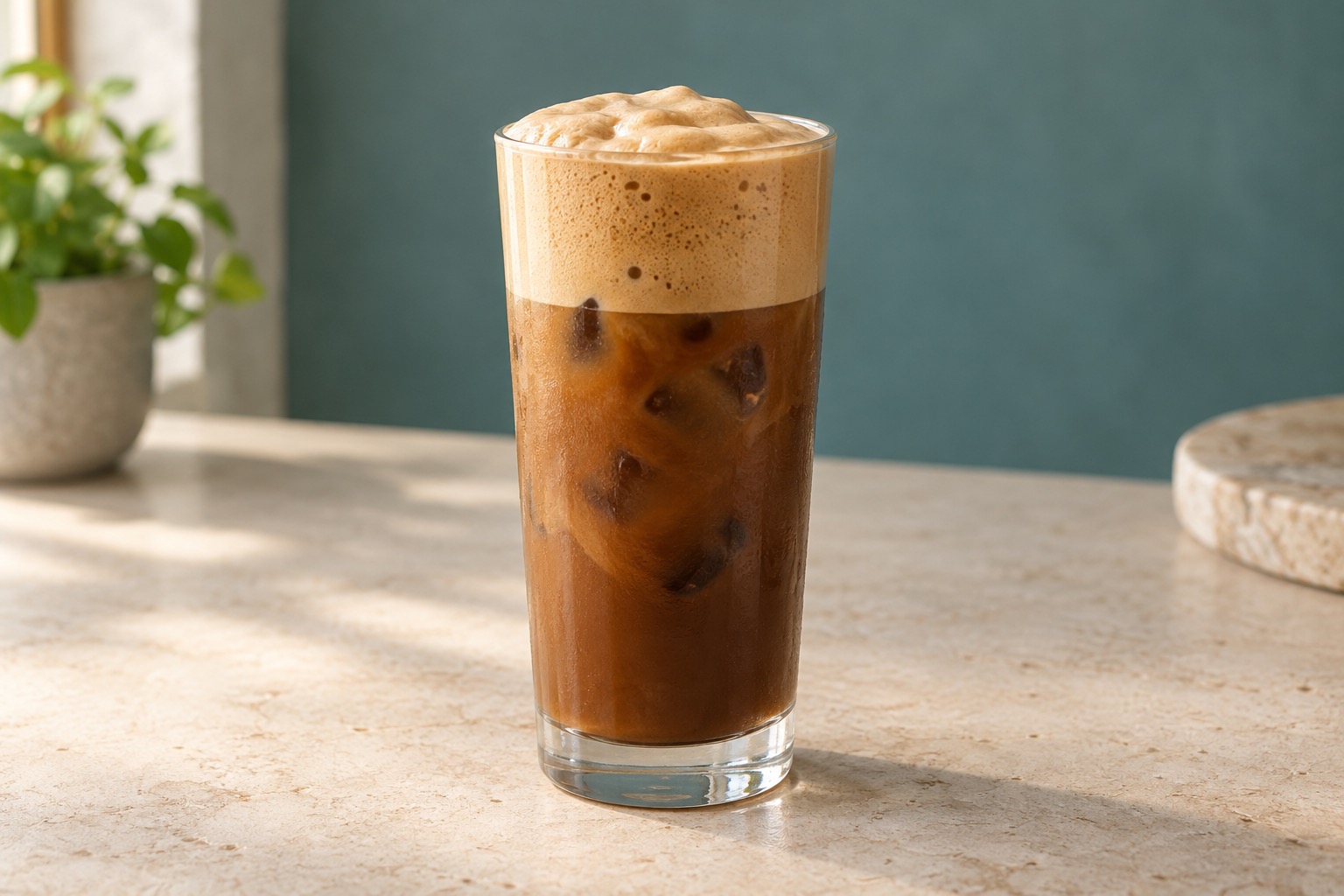
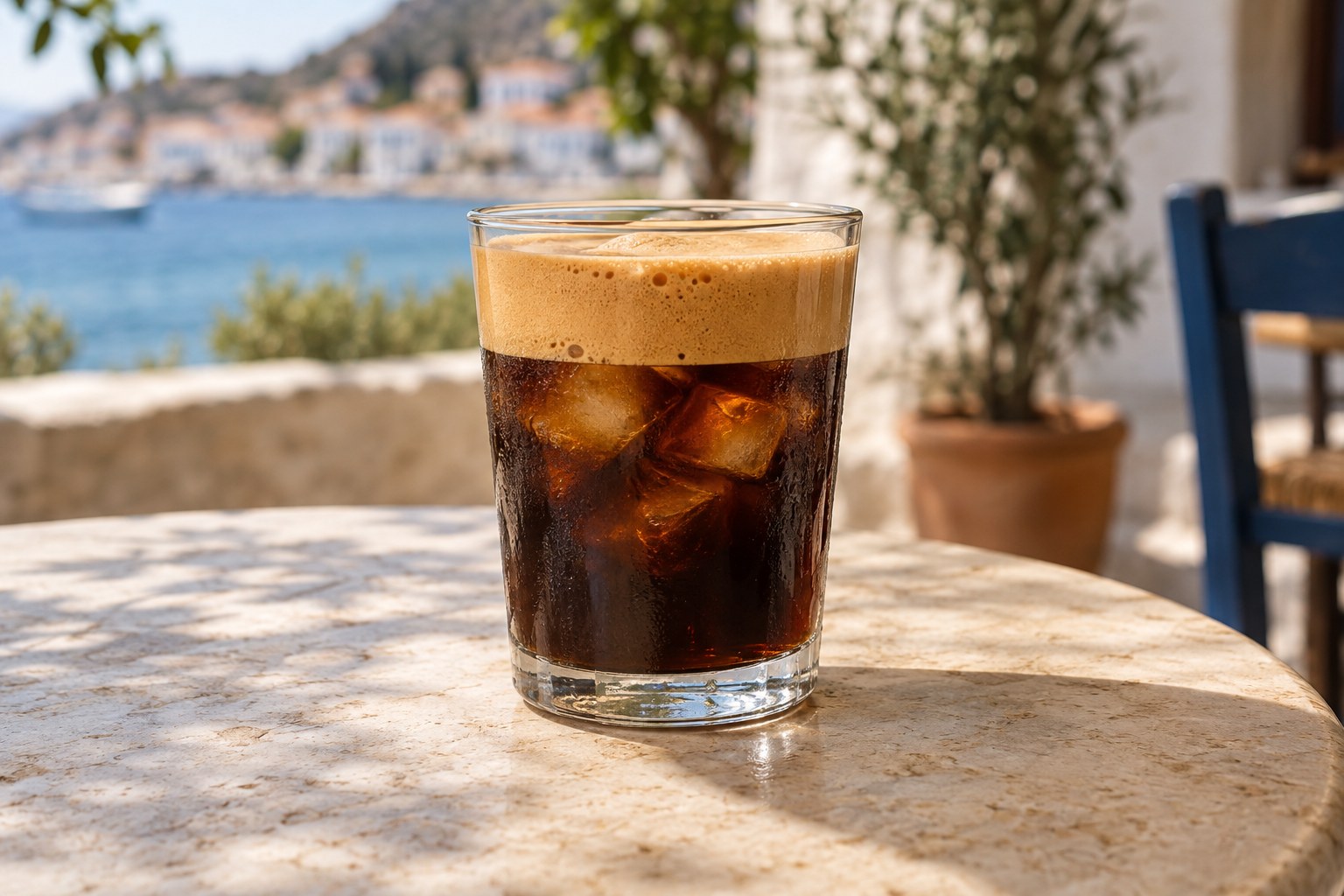
A Greek iced espresso preparation with a light coffee foam. This home adaptation uses freshly ground coffee in place of the capsules in Nespresso's recipe.
The story behind the cup
Freddo espresso is chilled espresso beaten or shaken to form a light foam, then served over ice. It belongs to Greece’s modern cold-coffee vocabulary. The important distinction from frappé is the coffee itself: freddo starts with espresso, while the familiar Greek frappé uses instant coffee. Sugar can be adjusted to preference, and the foam comes from working the coffee rather than adding milk.
Espresso machine and grinder, Scale, Tall mixing cup, Handheld drink frother, Strainer, 200 ml serving glass.
Ingredients
18 g finely ground coffee, brewed to 40 g espresso
100 g ice: 40 g for frothing and 60 g for serving
Optional: 4 g sugar (1 teaspoon)
Make your coffee
Brew 18 g coffee to 40 g espresso, starting around 25–30 seconds and adjusting the grind for your machine. Stir in the optional sugar while hot.
Put the espresso and 40 g ice in a tall mixing cup. Use a handheld drink frother on low for about 5 seconds to form a light foam; keep the head clear of the ice.
Put the remaining 60 g ice in a 200 ml glass. Pour in the cold coffee and foam, holding back the used ice with a strainer. Serve immediately.
Home adaptation; yields one small iced coffee. Allergen: no milk or other common major allergen added; check packaged ingredients. Contains caffeine. The foam comes from coffee, with no milk needed. espresso dose, weighed ice, sugar option and serving size are home specifications.
Recipe reference: Nespresso · Freddo Espresso. Home preparation adapted from the source; methods and preferences vary.
This Italian iced espresso is shaken until frothy, then served without its shaking ice. La Cimbali describes it as especially popular in Italy during summer.
The story behind the cup
A caffè shakerato gives espresso a different texture by shaking it with ice and, usually, sugar. The result is chilled and aerated, often served in a stemmed glass. Despite the cocktail-like presentation, the basic drink does not require alcohol. Italian espresso-machine maker Cimbali includes it among its coffee preparations, showing how a few simple bar techniques can transform a familiar short coffee into a refreshing drink.
Espresso machine and grinder, Scale, Metal cocktail shaker and strainer, Measuring spoon, 150–180 ml coupe or glass.
Ingredients
18 g finely ground coffee, brewed to 40 g espresso
10 ml simple syrup
160 g ice: 80 g for chilling the glass and 80 g for shaking
For a small syrup batch: 20 g sugar and 20 g hot water; use only 10 ml in the drink
Make your coffee
Dissolve 20 g sugar in 20 g hot water and cool. Measure 10 ml of this syrup; reserve the remainder for another use.
Chill a 150–180 ml coupe or small glass with 80 g ice.
Brew 18 g coffee to 40 g espresso, starting around 25–30 seconds and adjusting the grind for your machine.
Put the other 80 g ice and the 10 ml syrup into a metal cocktail shaker. Add espresso last, close securely, and shake vigorously for 10–15 seconds until cold and foamy.
Discard the chilling ice and water from the glass. Strain the coffee into it and serve immediately, without serving ice.
Home adaptation. Allergen: no common major allergen added; check packaged ingredients. Contains caffeine. This version has no liqueur. The espresso must be cooled by the ice before sealing the shaker; never seal hot liquid alone. espresso extraction, ice weights, syrup formulation, shaking time and glass capacity are home specifications.
Recipe reference: La Cimbali · Shakerato. Home preparation adapted from the source; methods and preferences vary.
A Canarian coffee combining sweetened condensed milk with ordinary milk. Its two milks give a small espresso a sweet, creamy finish; the layers are stirred together before drinking.
The story behind the cup
Leche y leche means “milk and milk”: this coffee combines ordinary milk with sweetened condensed milk. Those two ingredients do different jobs, adding a softer texture and concentrated sweetness respectively. The layered serving makes that combination visible before mixing. This Spanish recipe is distinct from café bombón, which centres on espresso and condensed milk alone; our version follows a published home recipe rather than one mandatory café formula.
Espresso machine and grinder, Scale, Small saucepan and narrow heatproof jug, Thermometer, Handheld milk frother, 150 ml heatproof glass and spoon.
Ingredients
20 g sweetened condensed milk
50 ml whole milk
18 g finely ground coffee, brewed to 36 g espresso
Make your coffee
Spoon 20 g condensed milk into a 150 ml heatproof glass.
Brew 18 g coffee to 36 g espresso, starting around 25–30 seconds and adjusting the grind for your machine.
Warm 50 ml whole milk in a small saucepan over low heat to about 60 °C without boiling, then transfer to a narrow heatproof jug and froth briefly. Keep the frother head submerged to avoid splashes.
Pour the espresso onto the condensed milk. Add the warmed milk, spooning its foam on top. Stir before drinking.
Home adaptation of the nonalcoholic preparation. Allergen: milk, including condensed milk. Contains caffeine. Milk volumes and condensed-milk quantity follow the source; no liqueur is added. Regional context: Additional reference
A small, slowly heated coffee with an optional hint of orange blossom.
The story behind the cup
Tunisia’s small-pot coffee belongs to a wider Ottoman-era brewing tradition. The pot is often called a zazwa or zazoua. Orange-blossom water is an optional local touch, giving a floral aroma to the dark coffee. Shared over conversation or games, the small serving invites a pause rather than a hurried takeaway.
Use a zazwa or cezve with plenty of room above the water for rising foam. Measure the water and optional sugar into the pot.
Bring the water just to a boil, then take the pot off the heat. Stir in the coffee carefully.
Return to low heat. Watch continuously; lift the pot away as the foam rises, before it spills. Do not leave it boiling.
Pour gently into a small heatproof cup, add the optional orange-blossom water, and leave for 1–2 minutes so the grounds settle and the drink cools. Sip above the sediment.
The 80 ml serving is our home measure. Use culinary floral water, not perfume. The pot and its handle may become hot. Illustration shows a similar style of small coffee cup.
Powder-fine coffee brewed in a small pot and poured without filtering.
The story behind the cup
Soorj is part of Armenian hospitality: a small coffee shared during visits or after a meal. Its powder-fine grind leaves sediment in the cup, and the slow preparation creates a little time for conversation. It shares techniques with neighbouring coffee traditions; the gathering around the cup matters as much as the equipment.
300 ml jezve / cezve suitable for your hob, measuring spoons, two small heatproof cups, dry oven mitt.
Ingredients
120 ml cold water
2 heaped teaspoons powder-fine coffee
1 teaspoon sugar, optional
1 lightly crushed green cardamom pod, optional
Make your coffee
Put the water, coffee and optional sugar and cardamom into a 300 ml jezve / cezve. Leave room for the foam.
Heat gently over low-to-medium heat and watch the surface. As foam rises and bubbles appear at the edge, lift the pot off the heat before it boils over.
Wait about 8 seconds, then return to the heat until the foam rises again. Lift away; repeat once more. Use a dry oven mitt if the handle is hot.
Remove any cardamom pod with a clean spoon. Divide gently between two small heatproof cups. Let the grounds settle for 1–2 minutes and sip slowly, leaving the sediment.
Cardamom is an optional variation, not a requirement. Methods vary between households. Illustration shows a similar small-pot preparation.
Recipe reference: Whisk Affair · Armenian coffee. Home preparation adapted from the source; methods and preferences vary.
A practical home version of the sweet, chilled coffee enjoyed in Cambodia and across Southeast Asia.
The story behind the cup
Coffee with sweetened condensed milk is enjoyed in Cambodia as well as neighbouring countries. The milk brings both sweetness and body, while ice makes it a refreshing cold drink. This shared regional style should not be assigned one exclusive national inventor. Our recipe offers an accessible home preparation rather than a claim to reproduce every Cambodian vendor’s method.
Coffee brewer and matching filter, heatproof jug, kitchen scale, spoon, 300–350 ml glass and clean ice scoop.
Ingredients
150 ml strong brewed coffee
25–35 g sweetened condensed milk, to taste
100 g ice made from drinking water
Make your coffee
Brew 150 ml strong coffee using your usual brewer. For a simple paper-filter version, use 15 g medium-fine ground coffee with about 180 ml hot water; collect approximately 150 ml.
Measure the condensed milk into a heatproof jug. Stir in the freshly brewed coffee until evenly mixed.
Cool the jug in a cold-water bath, keeping water out of the drink. Fill a 300–350 ml serving glass with the ice.
Pour the cooled coffee mixture over the ice, stir and serve immediately. Keep unused opened condensed milk refrigerated according to its label.
Contains milk. Our single-serving quantities and filter method are a home adaptation, not a fixed national standard. Illustration represents condensed-milk iced coffee.
Cold black coffee softened with water, with optional sugar and ice.
The story behind the cup
Mazagran’s name is associated with Mazagran near Mostaganem in Algeria. A widely repeated origin story connects it with French colonial soldiers in the 1840s, although details differ between accounts. The drink travelled and changed: Portugal’s lemon version is one later expression. This entry explores the simpler cold coffee-and-water base, without claiming it is today’s universal Algerian café order.
Coffee brewer and matching filter, heatproof jug, measuring jug, spoon, 300 ml glass and clean ice scoop.
Ingredients
120 ml strong brewed coffee, cooled
60 ml cold drinking water, plus more to taste
1–2 teaspoons sugar, optional
80 g ice, optional
Make your coffee
Brew strong coffee with your usual brewer. For a paper-filter option, use 12 g medium-fine coffee and about 145 ml hot water to collect approximately 120 ml.
If using sugar, dissolve it while the coffee is warm. Cool in a heatproof jug set in a cold-water bath; keep bath water out of the coffee.
Combine the cooled coffee and 60 ml cold water. Taste and add a little more water if you prefer a lighter drink.
Pour into a 300 ml glass, over the optional ice. Serve cold. This version contains neither lemon nor alcohol.
These quantities are our modern home adaptation of the reported coffee-and-water base, not a recovered historical formula. Ice is optional. See Portugal’s separate recipe for the lemon version.
A fragrant small-cup coffee inspired by Zanzibar’s spice traditions.
The story behind the cup
Zanzibar’s spiced coffee reflects the islands’ association with aromatic spices. Cardamom and ginger give this preparation its warmth. Small servings encourage slow sipping, sometimes with dates alongside. The referenced travel recipe describes coffee tasted in Zanzibar and adapts a local cookbook; spice combinations and sweetness vary, so this is one version rather than a single island-wide formula.
1.5 litre saucepan, measuring jug and spoons, stirring spoon, six small heatproof cups, dry oven mitt.
Ingredients
750 ml water
3 green cardamom pods, lightly cracked
5 level tablespoons ground coffee
½ teaspoon ground cardamom
½ teaspoon ground ginger
Sugar or dates to accompany, optional
Make your coffee
Put the water and cardamom pods in a saucepan of at least 1.5 litres. Bring to a gentle boil and cook for 10 minutes.
Lower the heat before stirring in the coffee. Keep at a gentle simmer for 5 minutes, watching for rising foam; lift away from the heat if it threatens to overflow.
Stir in the ground cardamom and ginger, then remove from the heat. Lift out the whole pods with a clean spoon.
Rest for 2 minutes so the grounds settle. Pour slowly into six small heatproof cups, leaving the thick sediment in the pan. Allow to cool to a comfortable sipping temperature; offer sugar or dates separately.
Home adaptation with a gentle simmer for easier foam control. Yield reduces during cooking. Ground spices remain in the cup; sip above the sediment. Illustration represents a small dark coffee serving.
Coffee, hot water and a reusable cloth filter: a simple home approach to Ecuadorian café de chuspa.
The story behind the cup
Chuspa refers here to the cloth used to strain ground coffee. Ecuador’s traditions vary by household and locality: Loja’s provincial government documents a chuspa competition celebrating different preparations. This is one approachable home method, not a claim that all Ecuadorians brew the same way.
Set a clean, food-safe cloth coffee filter securely over a heatproof jug holding at least 600 ml. Rinse with hot water and discard the rinse water.
Add the coffee. Bring fresh water to a boil, then let it settle briefly.
Wet the grounds with a little of the measured water, pause for about 30 seconds, then gradually pour the remaining water through. Keep the filter below its rim.
Let it drain without squeezing. Divide between two cups and sweeten if you like. Wash and store the filter according to its maker’s instructions.
Original home adaptation, not kitchen-tested: the 30 g / 500 ml ratio is a starting point, not a national standard. Adjust the grind and strength to taste.
A warm plate of green plantain, eggs and cheese, paired with freshly filtered coffee. This home recipe serves two.
The story behind the cup
Tigrillo is associated with Zaruma in Ecuador’s El Oro province. The Asociación de Chefs del Ecuador describes green plantain with eggs and cheese or pork, served with café pasado. This pairing brings that breakfast tradition to a small home kitchen.
Saucepan, frying pan, knife, fork or masher; cloth coffee filter and kettle for the pairing.
Ingredients
2 green plantains, peeled and cut into chunks
2 eggs
50 g fresh cheese, crumbled
½ white onion, finely chopped
10 g butter
1 tsp achiote oil (optional)
1 tbsp chopped cilantro (optional)
Salt and black pepper to taste
2 small cups café pasado, prepared separately
Make your breakfast
Boil the plantain chunks in water until tender, about 20–25 minutes. Drain and roughly mash.
Soften the onion in butter and optional achiote oil in a frying pan.
Add the plantain and beaten eggs. Stir over medium-low heat until the eggs are fully set, then fold in the cheese.
Season, add cilantro if using, and serve warm with the coffee.
Original two-person home adaptation, not kitchen-tested. Tigrillo has household variations, including versions with pork. This version contains eggs and dairy; the coffee is served alongside, not mixed into the food.
Hot coffee, condensed milk and a small pat of butter make this rich kopitiam-style cup.
The story behind the cup
Singapore’s Tourism Board lists kopi gu you as coffee with condensed milk and butter. It belongs to the local kopitiam coffee vocabulary; Michelin has also documented butter coffee in Singapore’s older coffee-shop culture. The butter adds richness to a sweet cup.
Cloth coffee filter or your usual coffee brewer, measuring jug, heatproof cup and teaspoon.
Ingredients
150 ml hot, strong brewed coffee
20 g sweetened condensed milk
5 g unsalted butter
Make your coffee
Brew strong black coffee using the linked kopi brewing method, stopping before its milk or sugar is added, or use your usual brewer. Measure 150 ml of the finished black coffee.
Add the condensed milk to a heatproof cup holding at least 200 ml. Pour in the hot coffee and stir.
Float the butter on top and let it soften. Stir if you prefer it blended through, then sip while warm.
Original home adaptation, not kitchen-tested: the quantities are our starting point, not a fixed kopitiam formula. Contains dairy. Butter is included for flavour, with no health claims.
Cloves, anise and citrus perfume this coffee-and-chicory home preparation. Makes two small cups.
The story behind the cup
Kafè msajjar is a Maltese spiced coffee tradition, with blends that may include chicory, cloves, aniseed and citrus peel. A stanjata is the traditional coffee pot. Our shorter saucepan-and-filter method is a home adaptation; household blends and cooking methods vary.
Saucepan, kettle, paper coffee filter with holder and heatproof jug.
Ingredients
18 g medium-ground coffee
3 g roasted ground chicory
300 ml water
1 whole clove
⅛ tsp aniseed
1 small strip orange peel, without white pith
Sugar to taste (optional)
Make your coffee
Combine the water, clove, aniseed and orange peel in a small saucepan. Simmer gently for 2 minutes.
Remove from the heat and stir in the coffee and chicory. Cover and steep for 4 minutes.
Pour through a paper coffee filter into a heatproof jug. Divide between two cups and sweeten if desired.
Home adaptation, not kitchen-tested. Quantities are a starting point, not a universal traditional formula. Try it with imqaret, Maltese date-filled pastries. Use roasted chicory sold for brewing.
Recipe reference: GuideMeMalta: kafè msajjar. Home preparation adapted from the source; methods and preferences vary.
A fragrant infusion of dried coffee fruit with cinnamon and clove. Makes two small cups.
The story behind the cup
Sultana uses dried coffee-cherry husks rather than roasted beans. Slow Food Bolivia traces its everyday use in the Yungas coffee-growing region and its spread into La Paz, from popular markets to cafés. Cinnamon is common; some preparations include cloves. This is a coffee-fruit infusion, not black coffee.
15 g food-grade dried coffee-cherry husks (cascara or sultana)
400 ml water
1 small cinnamon stick
1 whole clove (optional)
Cane sugar to taste (optional)
Make your coffee
Put the dried coffee fruit, cinnamon and optional clove into a heatproof teapot.
Pour over freshly boiled water, cover and steep for 8 minutes, or follow the cascara supplier’s brewing instructions.
Strain into two cups and sweeten to taste.
Home adaptation, not kitchen-tested. Quantities are a starting point, not a universal traditional formula. Use coffee fruit sold specifically for making drinks, not garden mulch or roasting chaff. Cascara contains caffeine. This simple steeped version does not reproduce every traditional preparation.
Cardamom coffee with a delicate rosewater finish, served with dates. Makes four small servings.
The story behind the cup
Omani qahwa is part of a wider Gulf coffee tradition and a gesture of hospitality. Cardamom is central; rosewater and saffron appear in regional versions. The British Museum documents rosewater added just before serving, with dates alongside. Small pours leave room for repeated offers from the host.
Small saucepan, fine strainer, serving pot and small heatproof cups.
Ingredients
20 g ground light-roast coffee
400 ml water
4 cardamom pods, lightly crushed
¼ tsp food-grade rosewater
3 saffron threads (optional)
Dates, to serve
Make your coffee
Bring the water to a simmer in a small saucepan. Add the coffee and cardamom.
Simmer gently for 10 minutes, keeping an eye on the pot. Remove from the heat and let the grounds settle for 3 minutes.
Stir in the rosewater and optional saffron, then strain into a warmed serving pot.
Serve small pours in heatproof cups, with dates alongside.
Home adaptation, not kitchen-tested. Quantities are a starting point, not a universal traditional formula. Use culinary rosewater, not cosmetic rosewater. Pot size and evaporation affect the final yield; this is a small-batch home method.
A small, sweet coffee with a measure of cognac or rum. Makes one serving.
The story behind the cup
Marghiloman combines coffee with rum or cognac. Radio Romania’s interview with food historian Cristian Cetățeanu describes competing origin stories linked to the Marghiloman name; its inventor is uncertain. Historical versions differ in their use of water and spirits. Our home version adds the spirit after brewing.
Combine water, coffee and optional sugar in a cezve or small saucepan. Stir once.
Heat gently until the foam starts rising, then remove from the heat before it boils over.
Let the grounds settle briefly. Pour slowly into a small heatproof cup, leaving most of the sediment in the pot.
Stir in the cognac or rum after brewing, away from the stove. Sip slowly, leaving remaining sediment behind.
Home adaptation, not kitchen-tested. Quantities are a starting point, not a universal traditional formula. Contains alcohol. For adults of legal drinking age. This adaptation uses water to brew and adds a small measure of spirit afterward; it is not the historical spirit-boiled method.
Coffee brewed directly in the drinking cup, with the grounds left to settle. Makes one cup.
The story behind the cup
Turek is a familiar Czech home and office preparation: hot water is poured directly onto ground coffee in the cup. Despite its name, it differs from Turkish coffee cooked in a cezve. Czech specialty-coffee educators also debate its long extraction, since the grounds remain in the drink.
Warm a heatproof cup holding at least 250 ml, then discard the warming water. Add the coffee.
Bring the measured water to a boil and let the bubbling stop. Pour over the grounds and stir briefly.
Leave for about 4 minutes, allowing the grounds to settle. Add sugar or milk if you like.
Sip gently without stirring up the bottom layer, and leave the sediment behind.
Home adaptation, not kitchen-tested. Quantities are a starting point, not a universal traditional formula. The coffee continues extracting while the grounds remain in the cup. If you prefer a cleaner cup, decant after brewing; that changes the traditional in-cup presentation.
Espresso over chilled coconut milk and ice. A modern café-inspired home drink, making one glass.
The story behind the cup
This entry represents modern Chinese café culture. Luckin Coffee’s annual report dates the launch of its coconut-milk series to April 2021. That documents a popular commercial version, not the invention of coconut coffee. Our recipe is an independent home adaptation, not Luckin’s proprietary formula.
Espresso machine or capsule machine capable of making a double shot, scale and heatproof glass.
Ingredients
36 g freshly brewed espresso (a double shot)
150 ml coconut milk beverage, chilled
80 g ice
1 tsp sugar syrup (optional)
Make your coffee
Fill a heatproof 300 ml glass with the ice and pour in the coconut milk beverage.
Prepare a double espresso and pour it over the coconut milk.
Stir, taste and add the optional syrup if needed. Serve immediately.
Home adaptation, not kitchen-tested. Quantities are a starting point, not a universal traditional formula. Use a pourable coconut milk beverage, not thick canned coconut cream. Brands differ in sweetness and richness; adjust syrup after tasting.
Strong hot filter coffee with dark rum and a little sugar, hidden under a cap of unsweetened whipped cream.
The story behind the cup
Pharisäer comes from North Frisia on Germany’s North Sea coast and is especially associated with Nordstrand. Legend says christening guests hid rum beneath whipped cream in their coffee so a pastor who disapproved of alcohol would not notice. When he discovered the trick, he called them “Pharisees.” By custom, the drink is sipped through the cream without stirring.
Coffee brewer, kettle, small bowl and whisk, measuring utensils, spoon and a 300 ml heatproof handled cup.
Ingredients
150 ml strong hot filter coffee, measured after brewing
40 ml dark rum
½ tsp white sugar (about 2 g)
40 ml cold unsweetened whipping cream, measured before whipping
Make your coffee
Whisk the cold cream in a small bowl until it holds soft peaks.
Warm the 300 ml heatproof cup with hot water, then empty it.
Add the sugar and 150 ml hot coffee, and stir until the sugar dissolves.
Add the 40 ml dark rum.
Spoon the whipped cream gently on top.
Do not stir after adding the cream. Once comfortably cool, sip the coffee through the cream. Makes one drink.
Contains alcohol. For adults of legal drinking age. Our house adaptation uses ½ tsp sugar rather than the traditional one or two sugar cubes. We dissolve the sugar in hot coffee and add room-temperature rum, simplifying versions that warm the rum first. Allergen: milk. Images and video are AI-generated illustrations; follow the written quantities.